Why an SEO Template Download Is Your Fastest Path to Consistent Rankings
SEO template download resources give you structured, repeatable frameworks for optimizing content without reinventing the wheel every time. Here’s what you can expect from a solid template library:
| Template Type | Primary Use | Impact |
|---|---|---|
| On-Page SEO Template | Optimize title tags, headers, keywords, and meta descriptions | Ensures every page follows ranking best practices |
| SEO Audit Template | Identify technical issues, broken links, and indexing problems | Surfaces quick wins and high-impact fixes |
| Content Strategy Template | Plan keyword clusters, content maps, and buyer journey alignment | Builds topical authority systematically |
| Keyword Research Template | Organize search volume, intent, and competitiveness data | Prioritizes high-ROI keyword targets |
| Link Building Template | Track outreach, guest posts, and backlink acquisition | Scales authority-building efforts |
| SEO Reporting Template | Monitor rankings, traffic, and conversion metrics | Proves ROI and guides iteration |
SEO used to be straightforward. You could stuff keywords into a page, build a few low-quality links, and rank. Today, Google uses 200+ ranking factors and advanced algorithms like RankBrain to evaluate content quality, user experience, and topical authority. Without a structured approach, it’s easy to spend hours fiddling with title tags and see zero results.
That’s where templates save you. They give you a proven checklist so you don’t forget critical steps like adding your keyword in H2 tags, optimizing image alt text, or aligning content with search intent. Templates also help you scale — whether you’re managing one site or ten, a repeatable framework keeps quality consistent and execution efficient.
But templates aren’t just about efficiency. They’re about strategic clarity. A good template forces you to think through keyword selection, content structure, and promotion plans before you publish. It prevents reactive SEO and replaces it with intentional, architecture-driven growth.
I’m Clayton Johnson, and I’ve spent years building taxonomy-driven SEO systems and AI-augmented workflows for founders and marketing leaders. Throughout my work, I’ve seen how the right SEO template download library can transform fragmented efforts into a cohesive growth engine that compounds over time.
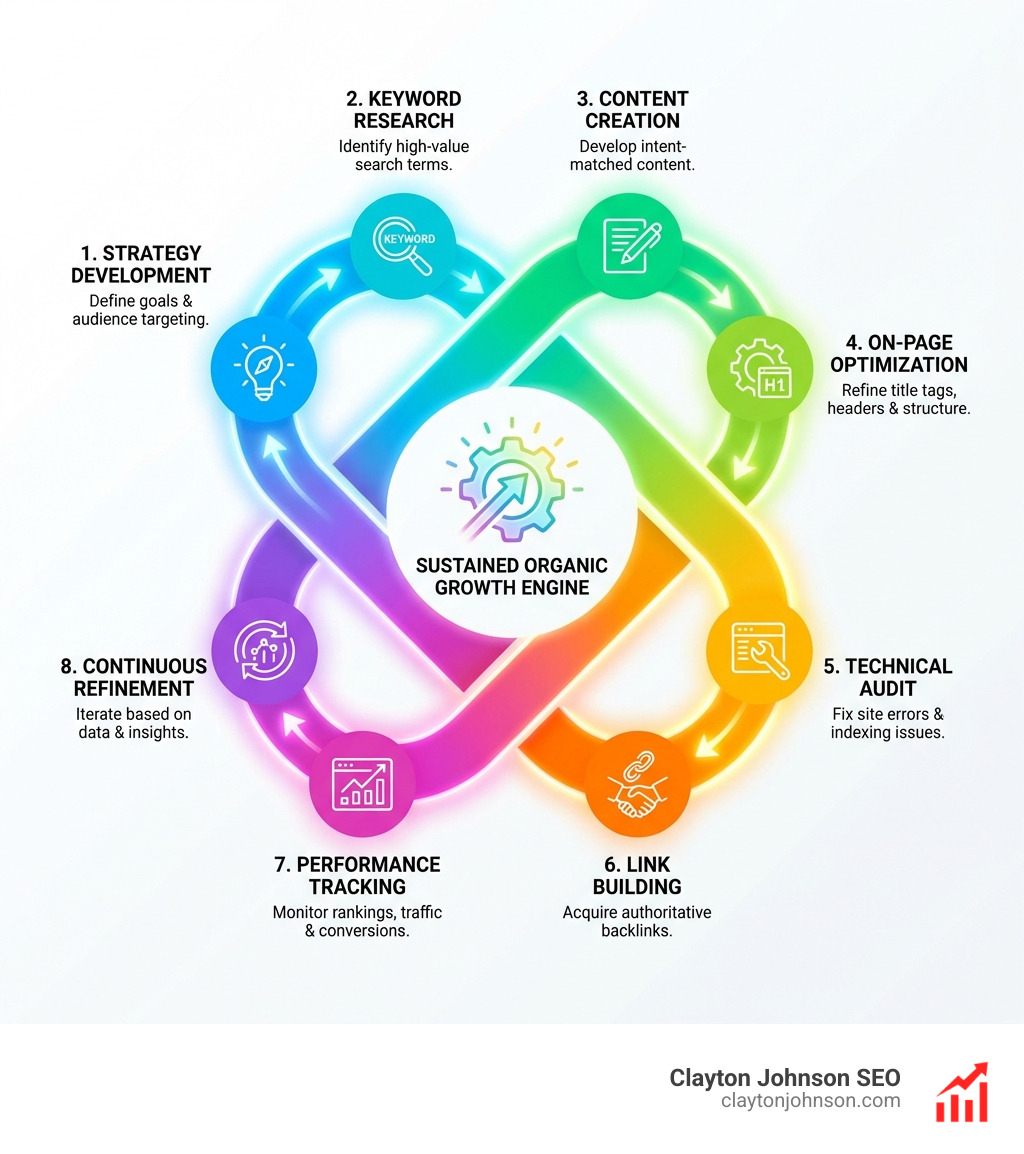
Why You Need an SEO Template Download to Scale Organic Performance
Scaling organic performance isn’t about working harder; it’s about working with better systems. If you are manually deciding how to optimize every single blog post or product page from scratch, you are leaking time and mental energy.
An SEO template download acts as a forcing function for quality. It ensures that whether you are writing the content or an outsourced freelancer is, the output meets the same high standard. This is critical because Google now uses over 200 ranking factors, including advanced machine learning algorithms like RankBrain. RankBrain doesn’t just look for keywords; it tries to understand the intent behind a user’s search and whether your page actually satisfies it.

By using a template, you standardize your workflow efficiency. You move from “guessing” to “executing.” You can use tools like Google Search Console to identify which pages are almost ranking and then apply a template-driven optimization to push them to page one. This repeatable success is the hallmark of a professional SEO operation.
Furthermore, templates are the ultimate cure for creative blocks. Staring at a blank Google Doc is intimidating. Staring at a content brief template that tells you exactly which headers to include and which keywords to target is empowering. If you want to dive deeper into how we structure these systems, check out more info about SEO services.
Streamlining Content Creation with an SEO Template Download
Content is the engine of SEO, but not all content is created equal. Different search intents require different structures. For example, a user searching for “how to brew coffee” wants a step-by-step guide template, while someone searching for “best espresso machines” is looking for a list post template.
Using a specific SEO template download for different content types allows you to:
- Match Search Intent: Ensure you are giving Google exactly what the user wants (e.g., a beginner’s guide template for educational queries).
- Standardize Briefs: Provide writers with a technical content brief template so they don’t miss the nuances of your industry.
- Beat Competitors: Use a competitor comparison template to highlight your unique selling propositions (USPs) effectively.
Managing Technical Complexity Without SaaS Sprawl
One of the biggest mistakes we see in Minneapolis and beyond is “SaaS sprawl”—paying for ten different tools that all do the same thing, yet none of them talk to each other. A comprehensive SEO Audit Template or a structured SEO Strategy Template can often replace expensive software.
These templates help you manage:
- Site Architecture: Is your site easy for bots to crawl?
- Page Speed: A critical mobile ranking factor.
- Indexing: Are your most important pages actually in Google’s index?
- Mobile-friendliness: Essential in a mobile-first indexing world.
By centralizing this data in a template, you get a bird’s-eye view of your technical health without getting lost in the “noise” of automated tool notifications.
Essential Types of SEO Templates for Every Growth Stage
As your business grows, your SEO needs evolve. A startup might just need a basic keyword list, while an enterprise requires a full-scale reporting dashboard template.
| Growth Stage | Key Template Needed | Why It Matters |
|---|---|---|
| Early Stage | SEO plan template | Sets the foundation and defines “winning.” |
| Growth Stage | Content audit template | Identifies “low-hanging fruit” to resurrect old content. |
| Scale Stage | Technical content brief template | Enables delegation and maintains quality at volume. |
Beyond these, every stage benefits from keyword mapping to ensure you aren’t cannibalizing your own rankings and competitive analysis to see what’s working for others in your niche.
Key Elements of a Comprehensive SEO Template Download
What makes a template “comprehensive”? It’s not just a list of keywords. A high-performing SEO template download must cover the three pillars of SEO: Relevance, Authority, and Experience.
When you download an On-Page SEO Template, ensure it includes fields for:
- Target Keywords: Primary and secondary terms.
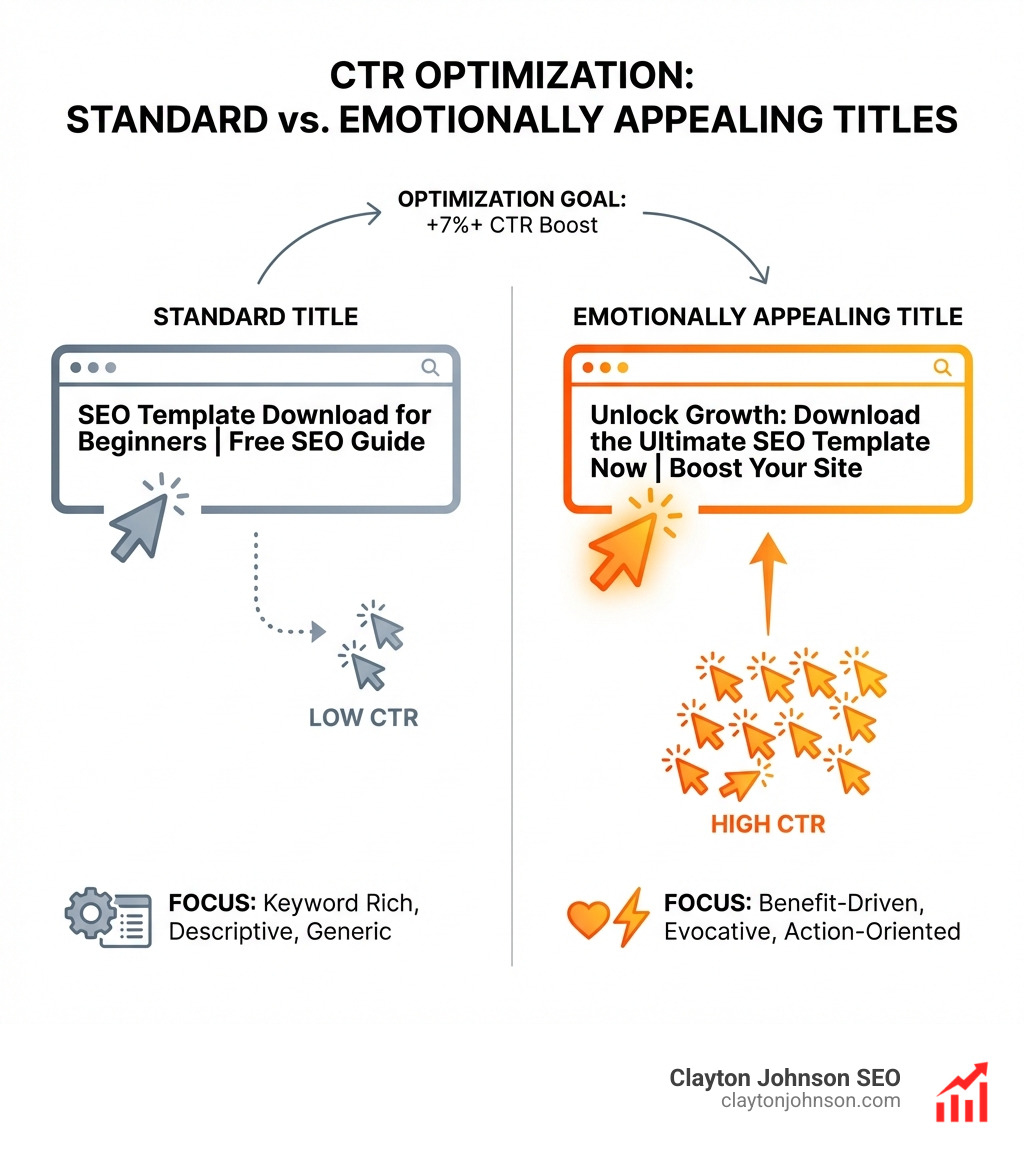
- Title Tags: Your “headline” for search engines (keep the keyword near the start!).
- Meta Descriptions: Aim for 155-160 characters. Research shows emotionally appealing descriptions can boost CTR by 7-6%.
- Header Tags (H1, H2, H3): To structure your page for both users and bots.
- Image Alt Text: Critical for accessibility and image search.
- Internal Linking: Distributing authority throughout your site.
- LSI Keywords: Latent Semantic Indexing terms that help Google understand context.
- Searcher Intent: Explicitly stating whether the page is for information, navigation, or transaction.
Don’t forget about authority. Guest posting remains a popular link building tactic according to industry research. A link building template helps you track these outreach efforts systematically. If your traffic is growing but your sales aren’t, you might need more info about conversion optimization to ensure your SEO efforts translate into revenue.
Mastering On-Page Optimization via SEO Template Download
On-page SEO is where you have the most control. Using a Free On-Page SEO Template helps you master the “fine print” of optimization.
For instance, did you know that your URL structure should be short and descriptive? Or that a product-focused content brief template should emphasize benefits over features to align with how people actually search?
How to Effectively Use SEO Templates to Streamline Your Workflow
Downloading the template is only step one. The magic happens in the implementation. We recommend a “composable” approach—building your system from modular parts that can be reconfigured as your business evolves.

- Customize the Template: Every industry is different. If you are in Minneapolis doing local SEO, your template needs a “Google Business Profile” section. If you are B2B SaaS, you need a “Product Integration” section.
- Integrate Data: Use a Search Insights Report Template to pull data from your analytics and see what’s actually moving the needle.
- Monitor Performance: Don’t just set it and forget it. Use a brand traffic template to track how your authority grows over time.
- Avoid Keyword Stuffing: Templates should guide you toward natural language. If you find yourself forcing keywords into a sentence just to “check a box,” stop. User experience always comes first.
For more on how to interpret this data, see more info about analytics and data.
Frequently Asked Questions about SEO Templates
How do SEO templates compare to traditional spreadsheets?
Traditional spreadsheets are often static and exist in a vacuum. Modern SEO template download options, particularly those built in platforms like Notion, create relational databases. This means your “Keyword Research” can be directly linked to your “Content Calendar” and your “Backlink Tracker.” This “composable project management” allows for much better visualization and scalability than a simple Excel file.
Can SEO templates be customized for specific industries?
Absolutely. The best templates are modular. You can add custom properties for SaaS (like “Trial Signups”), e-commerce (like “Add to Cart Rate”), or local SEO (like “Review Count”). The core SEO principles remain the same, but the “tactical layer” should always be industry-specific.
What common mistakes should I avoid when using templates?
- Using Generic Checklists: Don’t just follow a list because it’s there. If a step doesn’t apply to your page, skip it.
- Ignoring Search Intent: A perfectly optimized page will never rank if it provides a listicle when the user wants a tool.
- Lack of Prioritization: Not all SEO tasks are equal. Fixing a broken link on your homepage is more important than adding alt text to a decorative icon.
- Neglecting User Experience: If your template makes your writing sound like a robot wrote it, you will lose your audience (and eventually your rankings).
Conclusion: Moving from Tactics to Structured Growth Architecture
The difference between a site that gets 100 visits a month and one that gets 100,000 often comes down to structure. Most companies don’t lack tactics; they lack a structured growth architecture.
At Clayton Johnson and Demandflow.ai, we believe that clarity leads to structure, which leads to leverage, and ultimately, compounding growth. By using a professional SEO template download strategy, you aren’t just “doing SEO”—you are building a taxonomy-driven system that works for you 24/7.
Whether you are looking for AI-augmented workflows, competitive positioning models, or a growth diagnostic environment, we are here to help you move from fragmented tasks to a cohesive engine.
Ready to stop guessing and start growing? Work with me to build your custom growth infrastructure today.