What Is Content Marketing for B2B Companies (And Why Most Get It Wrong)
Content marketing for B2B companies is the practice of creating and distributing valuable content to attract, educate, and convert business buyers — not with ads, but with information they actually want.
Here’s the quick answer if you’re short on time:
B2B content marketing, in a nutshell:
- Define your ideal customer (ICP) — who you’re creating content for
- Create content for each stage — awareness, consideration, and decision
- Distribute it on the right channels — LinkedIn, email, organic search
- Measure pipeline impact — not just traffic or likes
- Repeat and improve — content compounds over time
Most B2B companies get this wrong because they treat content like a publishing schedule rather than a sales system. They ask “what should we post this month?” instead of “what does our buyer need to believe before they’ll choose us?”
That’s a costly mistake. Consider this: 64% of top-performing B2B marketers have a documented content strategy, compared to just 19% of the least successful. The difference isn’t talent or budget — it’s intent and structure.
B2B buyers are also doing more homework than ever. Research shows they complete 70–80% of their research before ever contacting a vendor. If your content isn’t showing up during that research phase, a competitor’s is.
And the payoff is real. Effective B2B content marketing generates up to 3x more leads than paid search advertising — at a fraction of the cost.
I’m Clayton Johnson SEO, an SEO strategist and founder of SmallBizSEO, with over a decade of experience building content systems that turn organic search into qualified pipeline — including for B2B and SaaS companies navigating complex, multi-stakeholder sales cycles. This guide gives you the no-fluff framework I use to help businesses make content marketing for B2B companies actually work.
Why Content Marketing for B2B Companies is Different (and Crucial)
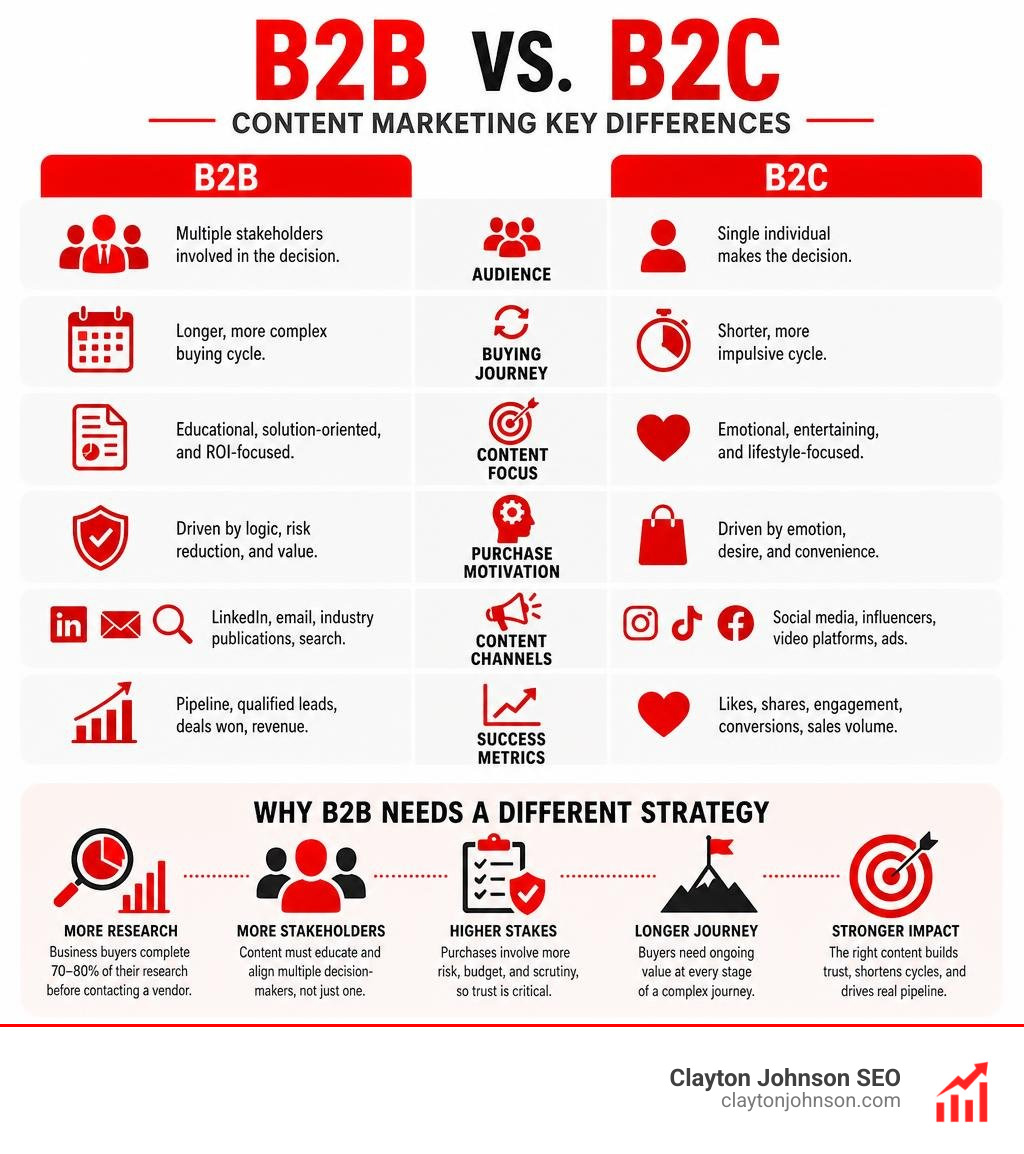
To build a strategy that drives real revenue, we must first understand how marketing to a business differs from marketing to a consumer. In the B2C world, a single buyer might see an Instagram ad for a pair of running shoes, click “buy,” and complete the transaction in under two minutes. It is a highly emotional, short-cycle, single-stakeholder decision.
In the business-to-business (B2B) space, the landscape is entirely different. We are not selling to a single impulsive shopper; we are selling to a committee.
The Complexities of the B2B Buying Process
- Multi-Stakeholder Decisions: The average B2B buying committee now consists of 6 to 10 decision-makers. Each person represents a different department with unique priorities. The VP of Sales wants pipeline velocity; the IT Director demands strict security integrations; the CFO wants to see clear ROI and a low cost per user. Your content has to speak to all of them.
- Longer Sales Cycles: B2B sales cycles are rarely measured in minutes or days. Instead, they typically span 6 to 12 months (or even longer for enterprise software). This extended timeline means a single blog post won’t seal the deal. You need a series of content touchpoints that nurture relationships over time.
- Education and Trust over Emotion: Business buyers are risking their budgets, professional reputations, and operational efficiency on your solution. They make decisions based on logic, data, and risk mitigation. Content must build radical trust and educate the market first, rather than relying on flashy, superficial sales pitches.
To illustrate these differences clearly, let’s look at how content functions across both spaces:
| Feature | B2B Content Marketing | B2C Content Marketing |
|---|---|---|
| Target Audience | Multiple stakeholders, buying committees, and executives | Individual consumers or household heads |
| Decision Timeline | Long-term (6 to 12 months) | Short-term (immediate to a few days) |
| Content Tone | Highly professional, educational, and data-driven | Emotional, entertaining, and highly visual |
| Core Value Driver | ROI, business efficiency, and risk reduction | Personal satisfaction, immediate need, or lifestyle fit |
| Primary Channels | LinkedIn, search engines (SEO), email newsletters, webinars | Instagram, TikTok, Facebook, YouTube |
| Lifecycle Goal | Long-term relationship building and contract renewals | Transactional purchase and brand loyalty |
Because the B2B journey is so relationship-focused, we can look at some of the world’s most creative brands to see how they transition these concepts into reality. For some creative inspiration on bridging this gap, check out our analysis of From Red Bull to B2B: The Best Content Marketing Examples.
Building a Pipeline-First B2B Content Strategy
Most B2B content strategies fail because they are publishing strategies in disguise. They focus on metrics that don’t pay the bills — like pageviews, social media likes, or raw organic traffic. If your content is driving millions of visits from people who will never buy your product, you aren’t doing marketing; you are running a digital library.
A pipeline-first content strategy starts with a clear focus on commercial outcomes. It requires us to filter every content idea through three core lenses:
1. ICP Definition, Not Persona Guesswork
We cannot write great content for a generic “Marketing Manager.” We need to build our strategy on a rigorous Ideal Customer Profile (ICP). This goes beyond basic demographics to analyze:
- Firmographics: Company size, revenue, and industry.
- Technographics: What tools are they already using? (e.g., Do they use Salesforce or HubSpot?)
- Buying Triggers: What changes in their business force them to look for our solution? (e.g., rapid hiring, regulatory changes, or declining pipeline).
- Content Consumption Patterns: Where do they actually hang out? Do they read in-depth guides, or do they skim LinkedIn on their morning commute?
2. Search Intent and Topical Authority
Instead of targeting high-volume keywords that are too broad, we prioritize search intent.
- Broad keywords like “CRM software” have a conversion rate of under 0.5% and are incredibly difficult to rank for.
- Specific, long-tail keywords like “CRM for fintech with 50+ employees” might have a lower search volume, but they boast conversion rates of 8% to 12% because the searcher has high commercial intent.
We build this authority using a pillar-cluster model. Rather than writing random blog posts, we create one comprehensive, 3,000-to-5,000-word “pillar” page that covers a broad topic in depth. We then write 5 to 8 shorter “cluster” articles that dive into specific subtopics, linking them all back to the pillar. This signals to search engines (and AI search engines) that we possess deep, organized expertise on the subject.
If you are a SaaS founder or marketer wondering where your organic traffic is going, you might be missing a structured approach. Take a look at The Content Marketing Strategy Your SaaS Is Missing to identify your gaps. For a deeper look at driving actual revenue with this framework, read our B2B Content Marketing Strategy That Drives Pipeline (2026 Guide).
Key Components of Content Marketing for B2B Companies
To keep your content engine running smoothly, we must establish a repeatable operational framework. This consists of four critical steps:
- Document Your Strategy: 64% of top performers document their plan. Your documented strategy should outline your target audience, core brand voice, content pillars, distribution channels, and specific KPIs.
- Set Clear Goals and KPIs: Every piece of content should have an assigned job. Is it designed to build awareness, educate a warm lead, or close a deal? Match your metrics to the content’s goal.
- Conduct a Content Audit: At least once a year, audit your existing content. Identify what is performing well, what needs to be updated, and what should be pruned or redirected to maintain your site’s search health.
- Allocate Resources Wisely: Content creation is demanding. Determine your internal capabilities and decide where you need external help. Whether you hire in-house writers or work with specialized agencies, make sure there is a clear owner who holds final editorial accountability.
Mapping the B2B Customer Journey and Personas
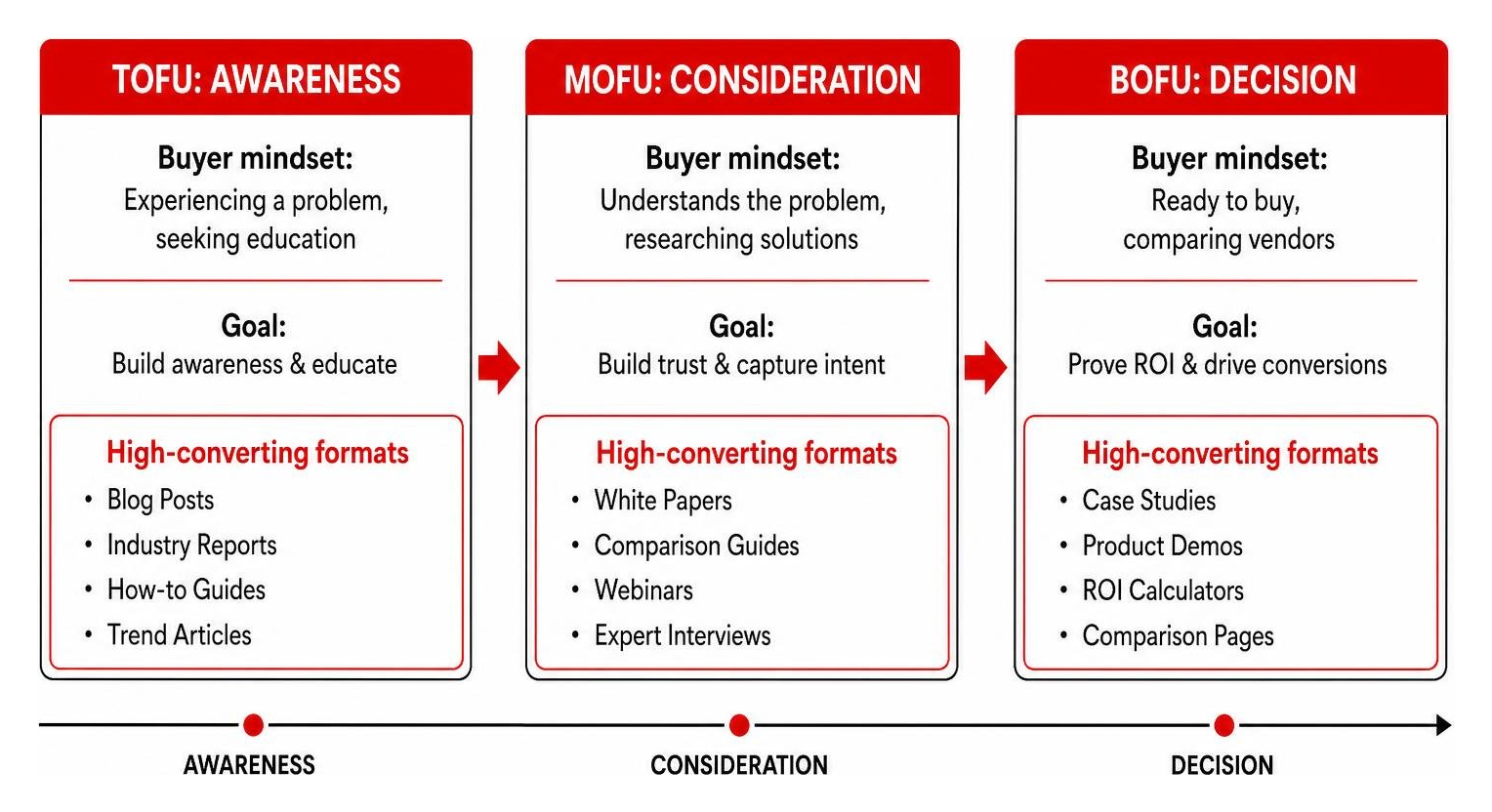
B2B buyers consume different types of information depending on where they are in their decision-making process. We map our content to three distinct stages of the funnel, adding a crucial qualification layer to ensure we are filtering for high-fit leads.
- Top of Funnel (TOFU) – Awareness: At this stage, the buyer is experiencing a problem but might not know how to solve it. Our content should focus on industry trends, best practices, and educational resources. We avoid talking about our product here; instead, we focus entirely on helping the buyer do their job better.
- Middle of Funnel (MOFU) – Consideration: The buyer now understands their problem and is actively researching different classes of solutions. This is where we introduce comparison guides, detailed white papers, and live webinars. We use these assets to capture first-party intent signals (e.g., who is attending our webinars or downloading our technical guides).
- Bottom of Funnel (BOFU) – Decision: The buyer is ready to purchase and is comparing specific vendors. Here, we publish highly targeted comparison pages, interactive ROI calculators, product-led guides, and detailed case studies. BOFU content typically converts at 3x to 5x the rate of top-of-funnel content because the buyer is already at the finish line.
B2B Content Trends Shaping 2026
The B2B marketing landscape has evolved rapidly, and keeping up with current trends is essential to stay competitive:
- AI-Assisted Content Production: AI has become a core part of the marketing workflow, with 81% of B2B marketing teams utilizing generative AI tools. However, the old playbook of publishing mass-produced, generic AI text is dead. Successful brands use AI to outline, research, and accelerate production, but rely on human subject matter experts to inject original data, opinions, and real-world case studies. To see how to build a scalable, high-quality system, explore The Ultimate Guide to AI Content Systems.
- The Rise of B2B Video: Business buyers are busy, and many prefer to watch rather than read. Over 61% of B2B marketers expect to invest in video marketing, with LinkedIn serving as a primary distribution hub. Short-form video demos, customer testimonials, and founder-led explainers are highly effective.
- Personalization and Account-Based Marketing (ABM): Generic content is easy to ignore. By combining your CRM data with your content strategy, you can deliver personalized content experiences tailored to specific target accounts or industries.
- Interactive Content: Calculators, self-assessments, and interactive quizzes keep users engaged on your website far longer than static text. They also provide valuable first-party data that your sales team can use to customize their outreach.
High-Impact Content Formats for B2B and SaaS
Not all content formats are created equal. In the B2B space, certain high-value assets consistently drive the highest pipeline impact.
- Case Studies: These are the workhorses of B2B marketing. Nearly 50% of business leaders appreciate case studies when evaluating vendors. A great case study doesn’t just say, “Our client loved us.” It uses specific, hard data: “How we helped Company X increase qualified pipeline by 40% in 90 days.”
- White Papers and E-books: These in-depth, authoritative documents are highly favored by executives and technical decision-makers. They are excellent tools for explaining complex technologies, presenting original research, and capturing high-intent leads.
- Educational Blog Posts: Blogs remain the foundation of organic search. B2B marketers who prioritize blogging are 13x more likely to see a positive ROI and experience a 67% lead-generation advantage over those who don’t.
- Webinars and Videos: Interactive video content allows you to build a personal connection with your audience. Live webinars with Q&A sessions are incredibly powerful for moving prospects from the consideration stage to the decision stage.
Leveraging Thought Leadership and Third-Party Content
True thought leadership is rare. Far too much B2B content simply repeats the same ideas that have been published dozens of times before. To stand out, we must focus on creating original, value-added insights.
One of the most effective ways to build credibility is through original research. By surveying your audience, analyzing proprietary industry data, or publishing original trends reports, you create a highly valuable asset that other websites will naturally want to reference. This earns your brand high-quality backlinks, boosts your domain authority, and positions you as a true industry leader.
Another smart strategy is leveraging high-quality third-party content. By curating insights from trusted publications or co-authoring content with recognized industry experts, you can build trust quickly without having to create every single asset from scratch. For some inspiring creative frameworks, check out The Best Marketing Examples to Spark Your Creativity.
Multi-Channel Distribution and Content Activation
An average piece of content with excellent distribution will always outperform a brilliant piece of content with no distribution. Unfortunately, many B2B companies spend 90% of their energy on creation and only 10% on distribution. We advocate for the 1:5 rule: spend equal or greater effort promoting and repurposing your content as you did creating it.
An effective distribution strategy relies on a mix of owned, earned, and paid channels:
- LinkedIn (Organic and Paid): LinkedIn is the undisputed king of B2B social media, generating over 50% of social traffic to B2B websites. Personal profiles often get 5x to 10x the reach of company pages, making founder-led thought leadership and employee advocacy highly effective.
- Email Newsletters: Email remains one of the most reliable ways to nurture relationships, with 71% of B2B marketers utilizing email newsletters in their strategy. Segment your lists by industry or funnel stage to deliver highly relevant content directly to your prospects’ inboxes.
- Content Repurposing: Never publish a blog post and let it sit. Turn a single long-form guide into a series of LinkedIn posts, an infographic, a short video script, and a newsletter feature. This maximizes your content’s lifespan and ensures it reaches different audience segments.
To learn from the industry’s top operators who have mastered this art, take a look at our list of Top Content Marketers You Should Have Followed Yesterday.
Measuring ROI and Pipeline Attribution
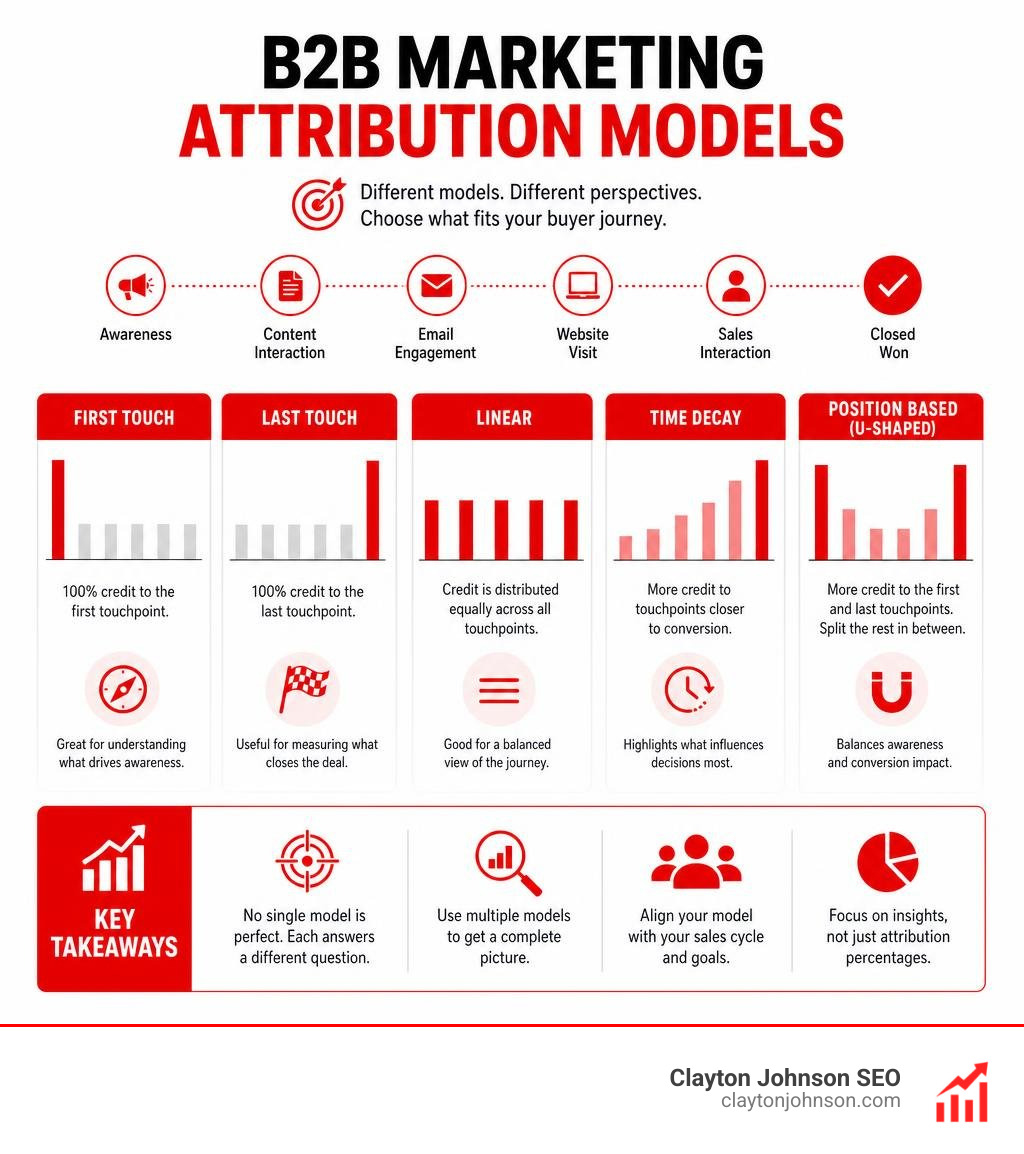
If you cannot measure the financial impact of your content, you will eventually lose your budget. To prove the value of your content marketing for B2B companies, you must look beyond vanity metrics like pageviews or social shares and track metrics that directly predict revenue.
The Metrics That Matter
- Content-Influenced Pipeline: The total dollar value of active sales opportunities that have engaged with one or more of your content assets.
- Content-to-Qualified-Meeting Rate: How many prospects who downloaded a piece of content or attended a webinar eventually booked a qualified meeting with your sales team.
- ICP-Fit Organic Traffic Percentage: The percentage of your website traffic that matches your target firmographics and technographics.
- Marketing Efficiency Ratio (MER): Your total revenue divided by your total marketing spend, giving you a high-level view of your overall organic efficiency.
To track these accurately, we use multi-touch attribution models combined with self-reported attribution (e.g., adding a simple “How did you hear about us?” field on your booking forms). This ensures you capture both the technical touchpoints and the organic word-of-mouth engagement that software tools sometimes miss.
Overcoming Common Challenges in Content Marketing for B2B Companies
Building a successful content engine is not without its hurdles. Here are some of the most common challenges B2B organizations face and how we overcome them:
- The Content-to-Sales Handoff: Up to 60–70% of marketing content is never used by sales reps. To solve this, hold monthly alignment meetings. Equip your sales team with specific content assets designed to handle common buyer objections, and make sure they know exactly when and how to send them to prospects.
- Consistent Quality: It is hard to produce high-quality content consistently. Solve this by building a structured content calendar and establishing a repeatable weekly workflow. Focus on quality over quantity — publishing four highly researched, deeply helpful articles per month will always outperform twenty thin, generic posts.
- Budget Constraints: Organic content is a compounding asset. While paid ads stop delivering leads the moment you stop spending, a high-quality piece of SEO content can continue to drive qualified traffic and leads for years. If budget is tight, start by focusing 100% of your efforts on Bottom-of-Funnel (BOFU) content that converts existing high-intent searchers.
For a deeper dive into the strategic mindset needed to build a high-performing lead engine, check out our recommended list of Books That Turn Your Marketing into a Relentless Demand Engine.
Frequently Asked Questions about B2B Content Marketing
How long does B2B content marketing take to show results?
While paid ads can drive traffic immediately, organic content marketing is a long-term play. Typically, you can expect to see early search visibility and initial leads within 3 to 6 months, with meaningful, compounding pipeline impact materializing between 6 to 12 months. However, bottom-of-funnel (BOFU) assets like comparison pages or case studies can show conversion results much faster — often within 30 to 60 days of being published and promoted to warm leads.
Should B2B companies gate their content?
We recommend gating content very sparingly. Gating basic blog posts or standard guides ruins your reach, hurts your SEO, and prevents AI search engines from indexing and citing your brand. Instead, keep your educational content completely ungated. Reserve gates only for highly valuable, proprietary assets that require significant resources to produce — such as original industry research reports, interactive tools, or custom templates.
How do you measure B2B content marketing ROI?
To calculate ROI, subtract your total content investment (including writing, design, distribution, and software tools) from the revenue generated by content-influenced or content-attributed deals, then divide by your total content investment. Using multi-touch attribution software and self-reported attribution fields helps you track exactly which assets your closed-won customers engaged with during their buying journey.
Conclusion
At Clayton Johnson SEO, we help B2B and SaaS companies map their target audiences, build high-authority topic clusters, and turn organic search into a predictable pipeline.
If you are ready to stop guessing what content to write and start building an organic acquisition system that compounds over time, let’s talk. We can help you identify your audience’s exact pain points, map their search intent, and create a content engine that drives real revenue.
Explore our strategic content and SEO services to build your pipeline today.