The Evolution of Search: How the Top SEO Experts in the World Define Success in 2026
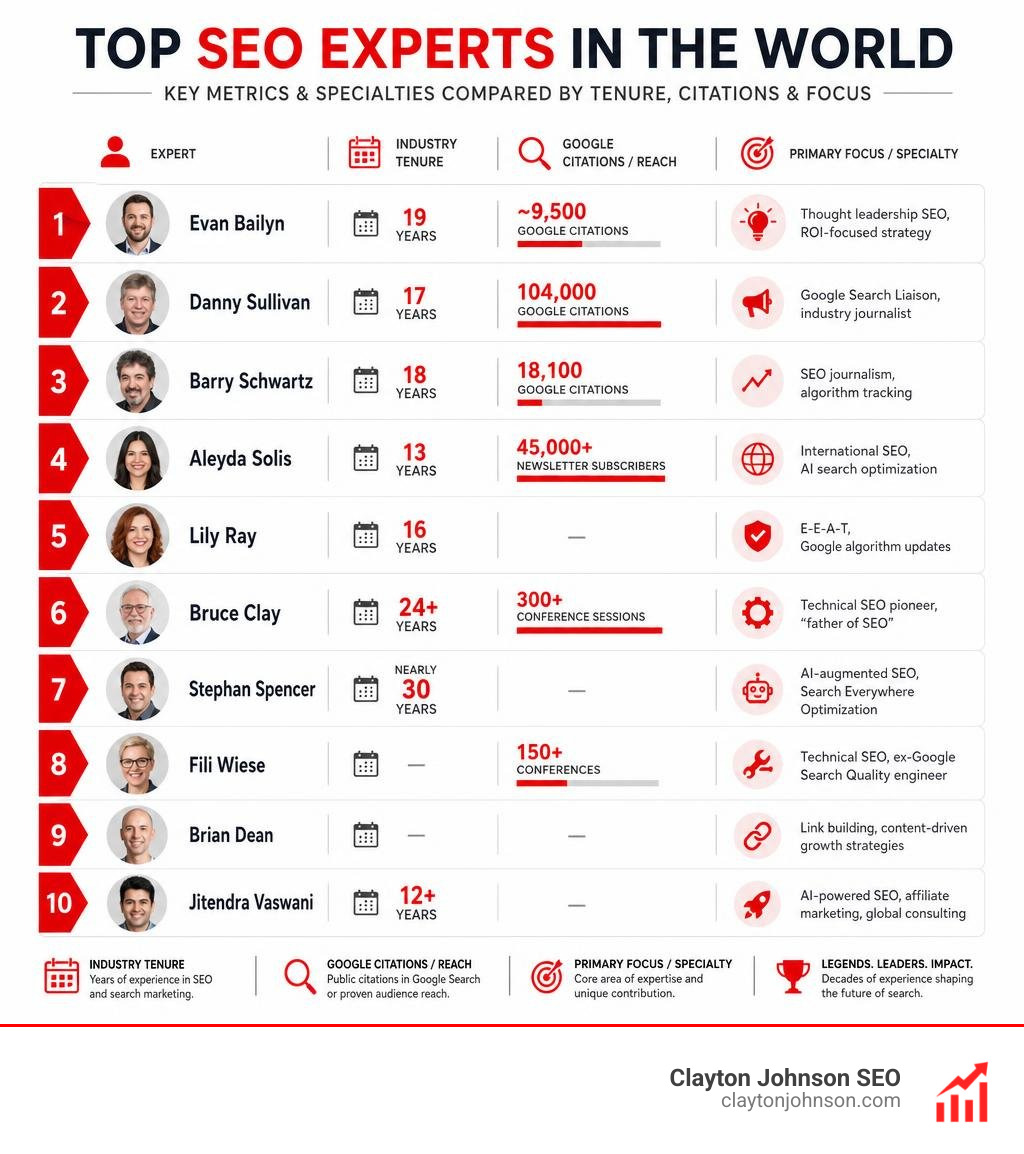
The top SEO experts in the world include a mix of technical specialists, international strategists, algorithm analysts, and AI search pioneers. Here is a quick reference list based on industry tenure, citations, and influence:
- Evan Bailyn – Thought leadership SEO, ROI-focused strategy (19 years, ~9,500 Google citations)
- Danny Sullivan – Google Search Liaison, industry journalist (17 years, 104,000 Google citations)
- Barry Schwartz – SEO journalism, algorithm tracking (18 years, 18,100 Google citations)
- Aleyda Solis – International SEO, AI search optimization (13 years, 45,000+ newsletter subscribers)
- Lily Ray – E-E-A-T, Google algorithm updates (16 years)
- Bruce Clay – Technical SEO pioneer, “father of SEO” (24+ years, 300+ conference sessions)
- Stephan Spencer – AI-augmented SEO, Search Everywhere Optimization (nearly 30 years)
- Fili Wiese – Technical SEO, ex-Google Search Quality engineer (150+ conferences)
- Brian Dean – Link building, content-driven growth strategies
- Jitendra Vaswani – AI-powered SEO, affiliate marketing, global consulting (12+ years)
SEO used to be simpler. You picked keywords, built links, and watched rankings climb.
That world is gone.
Today’s search landscape includes AI Overviews, generative answer engines, zero-click results, and large language models that decide which brands get mentioned and which ones disappear. The best SEO experts in the world have had to rethink almost everything, and many of them made expensive mistakes along the way before figuring out what actually works now.
This article looks at what separates elite practitioners from the rest, what costly mistakes they’ve openly learned from, and what their experience means for small business owners trying to compete in search today.
I’m Clayton Johnson, an SEO strategist and founder of Clayton Johnson SEO with over a decade of experience studying and applying the strategies used by the top SEO experts in the world to help small businesses build real, lasting search visibility. The lessons these experts share, especially around AI search, algorithm volatility, and content strategy, are exactly what I use to help businesses like yours get found, trusted, and chosen online.
Evaluating the top SEO experts in the world requires looking past superficial follower counts. In 2026, the industry measures authority using a combination of quantifiable metrics and real-world impact:
- Industry Tenure: Decades of experience navigating multiple core algorithm updates.
- Google Citations: How often an expert’s work, research, or case studies are cited across academic papers, patents, and top-tier publications.
- Speaking Engagements: Keynote presentations at major global conferences.
- Hands-on Testing: Active, continuous testing of search theories rather than just repeating industry folklore.
As search engines shift from classic blue links to generative answers, the metric of “success” has changed. It is no longer just about ranking first for a high-volume keyword; it is about owning the search landscape across multiple touchpoints. Many of the industry’s most influential pioneers are recognized in The Greatest Marketers of All Time for their ability to adapt to these massive structural shifts.
The Shift from Keywords to Entity-First Optimization
For years, SEO was dominated by keyword density and exact-match anchor text. Industry pioneer Bruce Clay, who has spent over 24 years shaping search marketing, advocates for a framework called “SEO 2.1.” This approach replaces keyword obsession with entity-first strategies.
Search engines like Google no longer view words as mere strings of text. Instead, they understand them as “entities” – real-world things, people, concepts, and places with relationships to one another.
To win in this environment, your website must establish itself as a trusted entity. This means focusing heavily on customer experience, brand authority, and structured data (schema markup) so search engines can clearly map your business’s relationship to your industry’s core topics. This level of strategic thinking is what secures a spot for search pioneers in The Digital Marketing Expert Hall of Fame.
How Top SEO Experts in the World Navigate AI Overviews and GEO
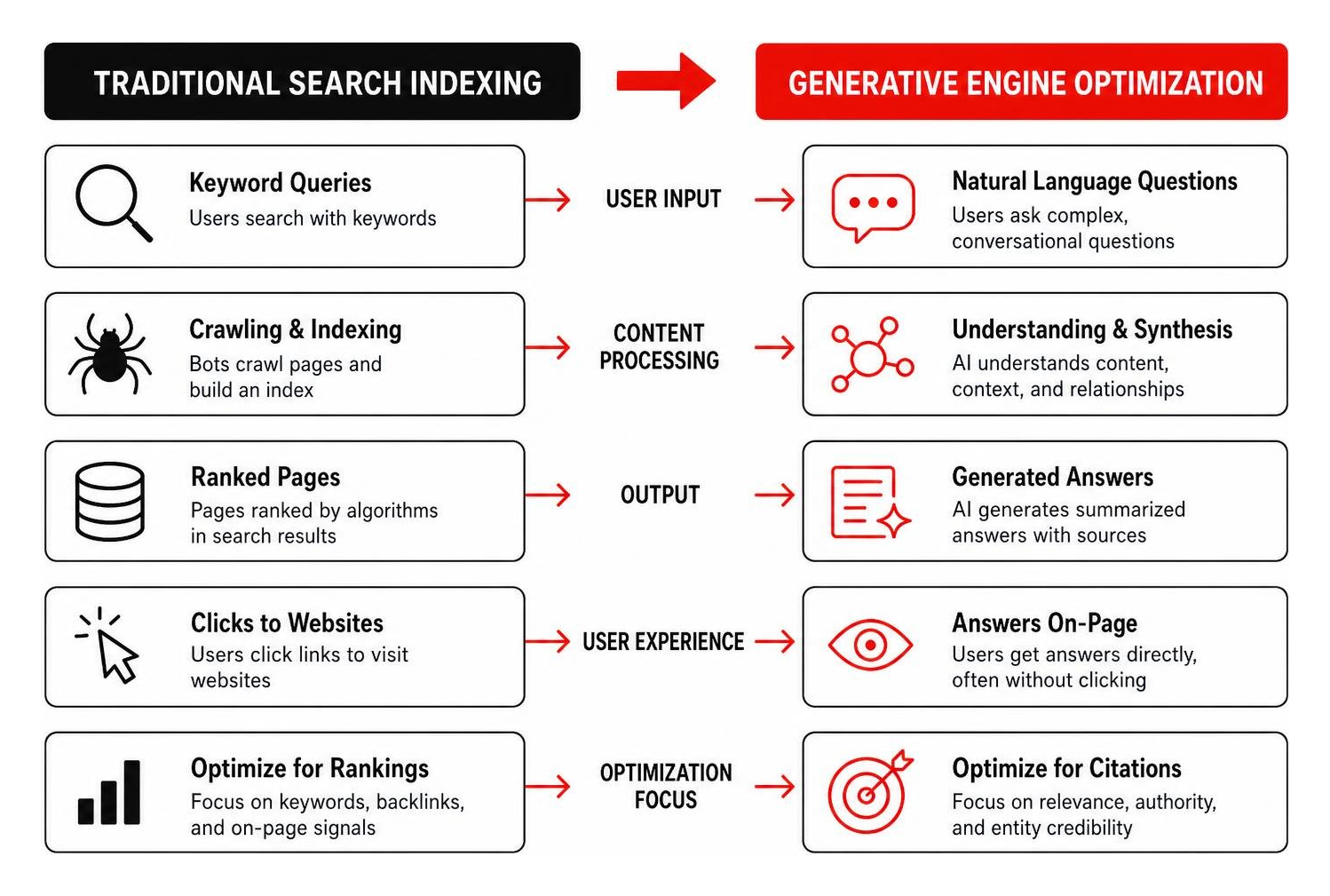
The rise of generative AI has introduced two new acronyms to the modern marketer’s vocabulary: GEO (Generative Engine Optimization) and AEO (Answer Engine Optimization).
With Google’s AI Overviews frequently answering queries directly on the search results page, organic click-through rates have shifted. Users are increasingly engaging in “zero-click searches.”
To remain visible, the top SEO experts in the world have adapted their strategies in several key ways:
- Optimizing for AI Crawlers: Structuring code and site architecture so that LLM bots (like GPTBot or Google-Extended) can easily crawl, parse, and cite your content.
- Search Everywhere Optimization: Treating platforms like YouTube, TikTok, Reddit, and voice assistants as search engines.
- Providing Direct, Structured Answers: Formatting key data points in concise, bulleted, or table formats that AI engines can easily extract and present as citations.
Adapting to these shifts is critical for any modern brand. Businesses looking to update their approach can explore specialized resources like Best AI SEO Services to align their content with generative search engines.
Profiles in Search: Key Differences and Specialties of Elite Practitioners
The search industry is highly specialized. While some experts focus on technical audits, others specialize in international scaling or algorithm analysis.
| Expert Name | Industry Tenure | Key Specialty | Key Metric / Authority Signal |
|---|---|---|---|
| Evan Bailyn | 19 Years | Thought Leadership & ROI Strategy | ~9,500 Google Citations, 3 Books |
| Barry Schwartz | 18 Years | SEO Journalism & Algorithm Tracking | 18,100 Google Citations, Editor at Search Engine Land |
| Aleyda Solis | 13 Years | International SEO & AI Search | 45,000+ SEOFOMO Subscribers, 120+ Keynotes |
| Lily Ray | 16 Years | E-E-A-T & Core Algorithm Updates | 166,400+ Social Media Followers, ~90 Keynotes |
| Danny Sullivan | 17 Years | Search Liaison & Industry Journalism | 104,000 Google Citations, 733,000+ Followers |
Understanding these distinct focus areas helps businesses match their specific technical or creative needs with the right strategic frameworks. Studying these differences reveals why certain individuals rise to the top of the field, as discussed in Who Really Is the Best Marketer of All Time.
Technical SEO and Google Penalty Recovery Pioneers
When a website suffers a sudden drop in organic traffic, technical diagnostics become the top priority.
Fili Wiese, an ex-Google Search Quality engineer, brings unique insight to this area. Having worked directly on Google’s internal search tools, spam policies, and manual actions, Wiese specializes in technical audits, page speed optimization, and complex website migrations. He emphasizes that the same technical fundamentals that make content easy for search engines to index also make it easier for large language models to crawl and cite.
Similarly, technical experts like Jono Alderson focus on the underlying code, sitemaps, and robots.txt files that dictate how efficiently search crawlers interact with a site. For those aiming to build a career in this technical discipline, resources like So You Want to Be an SEO Expert offer a helpful roadmap.
International SEO and AI Search Optimization Leaders
Scaling a brand across multiple countries, languages, and search landscapes requires a specialized approach.
Aleyda Solis is a leading authority on international SEO, helping SaaS, e-commerce, and marketplace brands scale across European, American, and Latin-American markets. Through her consultancy, Orainti, her video series Crawling Mondays, and her popular newsletter SEOFOMO, Solis educates the industry on managing multi-lingual site architectures.
Recently, she has focused on helping brands build representative AI search prompt libraries to measure their visibility in generative AI tools. Her approach shows how traditional international frameworks can evolve to meet modern search demands, a topic explored further in the Ultimate Best Digital Marketer World 2026 guide.
Lessons Learned: The Biggest Mistakes and Strategy Pivots of Top SEO Experts
Even the most prominent names in search have had to pivot their strategies after major algorithm updates or shifts in search behavior.

Overcoming Algorithm Volatility and Penalty Pitfalls
Algorithm updates can disrupt organic search traffic overnight. Experts like Marie Haynes and Cyrus Shepard have spent years analyzing these fluctuations, particularly around Google’s core updates and manual webmaster penalties.
One of the most common mistakes in search marketing is reacting to traffic drops with panic. Experts warn against making sudden, sweeping changes to a website immediately after an update. Instead, they recommend:
- Conducting a Backlink Audit: Identifying and disavowing low-quality, manipulative links.
- Evaluating E-E-A-T Signals: Ensuring content clearly demonstrates Experience, Expertise, Authoritativeness, and Trustworthiness.
- Analyzing Search Console Data: Pinpointing the exact pages and queries that lost visibility to determine if the drop is sitewide or localized.
Understanding how to navigate these updates is essential. For a look at how top agencies structure their approaches to algorithm recovery, see The Neil Patel Strategy for SEO Dominance. Additionally, building high-quality, natural backlinks remains a core defense against volatility, as outlined in The Brian Dean Guide to Next Level Link Building.
Why Blindly Trusting AI Content is a Costly Mistake
With the launch of advanced generative AI tools, many marketers attempted to scale their content production by publishing thousands of AI-generated articles with minimal human review.
Top practitioners like Stephan Spencer and Jitendra Vaswani warn that this approach often leads to indexing issues and ranking drops. Search engines prioritize original, helpful content. Purely automated content that lacks first-hand experience, unique insights, or editorial oversight rarely performs well over the long term.
To use AI effectively in your content strategy, consider these best practices:
- Incorporate Human Oversight: Use AI to draft outlines, conduct initial research, or brainstorm ideas, but rely on human writers to add voice, experience, and editorial accuracy.
- Build Interactive Tools: Spencer suggests moving away from static content and using AI to build interactive web apps or tools that keep users engaged.
- Leverage AI for Deep Research: Use tools like Gemini Advanced or ChatGPT to analyze market gaps and user search intent, rather than just generating text blocks.
For brands looking to integrate these technologies responsibly, partnering with specialized AI Consulting Companies can help ensure your AI strategies support long-term search visibility.
Frequently Asked Questions
Who is considered the father of SEO?
Bruce Clay is widely regarded as the “father of SEO.” He founded Bruce Clay, Inc. in 1996—predating the launch of Google—and has spent over 24 years helping to define the standards, ethics, and technical methodologies of the search engine optimization industry.
What is the difference between SEO and GEO?
Traditional SEO focuses on optimizing websites to rank in search engine results pages (SERPs) for human users. GEO (Generative Engine Optimization) focuses on optimizing content so it is crawled, understood, and cited by AI chatbots, large language models, and AI-powered overview features.
What Trusted Sources Identify the Top SEO Experts in the World?
Highly trusted sources for identifying leading search professionals include established industry publications like Moz and Search Engine Land, specialized research firms like First Page Sage, and active community forums like Reddit’s r/SEO, where hands-on practitioners share real-world test results.
Conclusion
The search landscape in 2026 requires a balance of technical precision, creative content, and adaptability to AI-driven search models. By studying the strategies of the top SEO experts in the world, we can see that long-term search visibility relies on building a trusted brand, prioritizing user experience, and maintaining high editorial standards.
At Clayton Johnson SEO, we help businesses navigate these changes. We work with you to understand your target audience and design content and search strategies that build lasting authority.
If you are ready to improve your organic search performance and prepare your website for the future of search, explore Why Clayton Johnson is the SEO Expert Your Website Deserves and connect with our team of specialists at SEO Expert.