Why SEO Minneapolis Web Design Matters for Local Business Growth
SEO Minneapolis web design is the practice of building websites that both look great and rank well in local search results — so Minneapolis customers can actually find your business online.
Here is a quick overview of what this guide covers:
| Topic | What You’ll Learn |
|---|---|
| Web design + SEO integration | Why they must work together from day one |
| Local SEO and Google Maps | How to rank in the Minneapolis 3-Pack |
| Google Business Profile | How to optimize it for more calls and visits |
| AI search and GEO | How to stay visible as search evolves |
| Agency selection and pricing | What to expect and what to watch out for |
| Cost and timeline | Realistic numbers for small businesses |
Minneapolis is one of the most competitive local markets in the state. It has more Fortune 500 companies per capita than almost any other U.S. city outside New York. That means even small businesses are competing in a sophisticated digital environment.
And the stakes are real:
- 46% of all Google searches have local intent
- 76% of people who search for a local business visit one within 24 hours
- Mobile users will leave a slow site in 3 seconds or less
A beautiful website that nobody finds is just an expensive brochure. And strong SEO without a well-built site means traffic that never converts. The two are inseparable.
I’m Clayton Johnson, an SEO strategist with over a decade of experience helping small businesses build search visibility — including guiding local companies through the full process of SEO and Minneapolis web design from technical foundations to Google Maps dominance. In the sections below, I’ll walk you through everything you need to know to turn your website into a real growth engine for your business.
The Power of Integrated SEO Minneapolis Web Design
Many business owners treat web design and search engine optimization as two completely separate projects. First, they hire a designer to build a beautiful, modern website. Then, months later, they hire an SEO agency to “do SEO” to it.
This compartmentalized approach is a recipe for wasted budgets and missed opportunities. When we build a website without search in mind, we often end up with technical issues that block search engines from crawling the pages. Or worse, we build a site with beautiful visuals but zero structure to support the keywords that local customers actually search for.
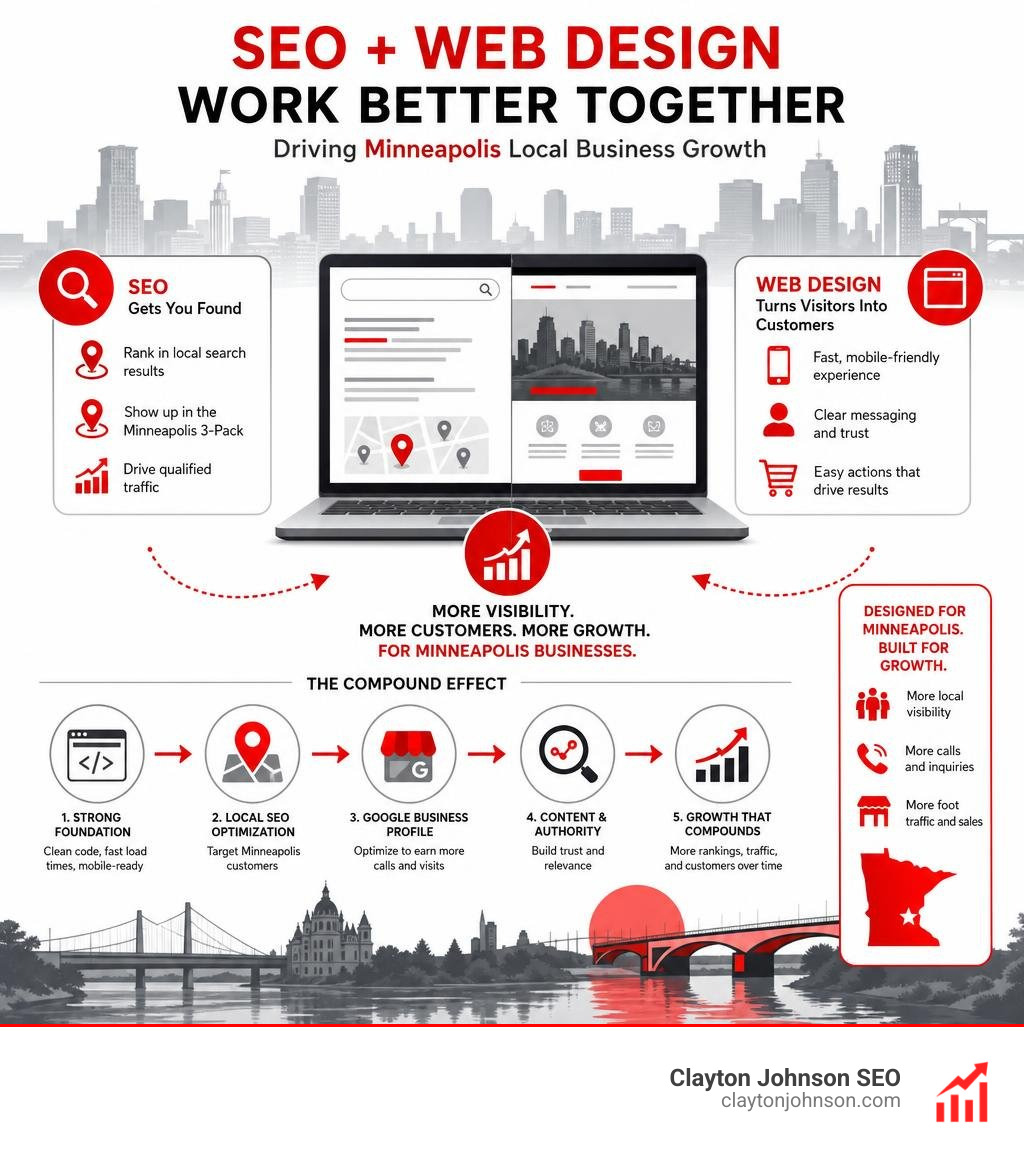
True digital growth happens when web design and SEO are planned together from day one. Web design focuses on the user experience (UX), visual branding, and layout. It ensures that when a user lands on your site, they trust your business, find the information they need, and take action. On the other hand, SEO focuses on search visibility, crawlability, and rankings.
When integrated correctly, these two disciplines create a compounding effect. Excellent user experience leads to longer visit times and lower bounce rates, which signals to Google that your site is valuable. This, in turn, boosts your search engine rankings. If you want to dive deeper into how design and branding establish this initial trust, check out our guide on Web Design and Branding.
Key Features of a High-Performing, Search-Friendly Website
To stand out in the Twin Cities market, your website must be built to satisfy both human visitors and search engine crawlers. This requires balancing visual appeal with strict technical performance standards.

To get a firm grasp on how search engines evaluate these elements, you can read our breakdown of SEO 101 or explore The Only Complete Guide to Search Engine Optimization You’ll Ever Need.
Every high-performing, SEO-friendly website should feature:
- Mobile Responsiveness: Over half of all local web traffic in Minneapolis comes from mobile devices. Your site must adapt seamlessly to any screen size.
- Sub-2-Second Load Times: Page speed is a direct Google ranking factor. If your site takes longer than 3 seconds to load on mobile, you will lose up to half of your potential traffic before the page even displays.
- Secure HTTPS Encryption: Google prioritizes secure websites. An SSL certificate is non-negotiable for protecting user data and maintaining search credibility.
- Clean, Intuitive Navigation: Users and search crawlers should be able to reach any page on your website within three clicks or fewer.
- Clear Calls to Action (CTAs): Phone numbers, contact forms, and booking links must be easy to find, especially on mobile screens.
Technical Foundations of SEO Minneapolis Web Design
Under the hood, a search-friendly website relies on clean code and smart architecture. This is where we bridge the gap between creative design and technical execution.
First, site architecture must be logical. We recommend a “silo” structure where your services are clearly categorized. For example, instead of listing all your services on a single, cluttered page, you should build dedicated, individual landing pages for each service you offer.
Second, we highly recommend building on an open-source content management system (CMS) like WordPress. WordPress currently powers over 43% of all websites globally because it is highly structured, easy for search engines to crawl, and gives you 100% ownership of your digital assets. Unlike proprietary page builders that lock you into their hosting systems, WordPress allows you to migrate your site whenever you want and implement advanced technical optimizations easily.
Finally, implementing schema markup (structured data) is essential. Schema is a specialized code added to your website that helps search engines understand exactly what your content means. For local businesses, schema markup can tell Google your physical address, business hours, price range, and customer rating, making it easier for Google to display your business in rich search results. For a step-by-step approach to mapping out these technical elements, refer to our A-Z Guide to SEO Strategy.
Future-Proofing with AI Search and Generative Engine Optimization (GEO)
As we navigate 2026, the search landscape is shifting rapidly. Traditional keyword rankings are no longer the only goal. Users are increasingly turning to AI-powered search engines and tools like ChatGPT, Perplexity, Gemini, and Google’s AI Overviews to find local services.
To stay visible, your website must be optimized for Generative Engine Optimization (GEO). This means structuring your content so that AI engines can easily crawl, parse, and cite your business as a trusted source.
How do we do this?
- Entity Optimization: Write clear, authoritative content that positions your business as a recognized “entity” in your industry and local area.
- Q&A Formatting: Structure your content to directly answer common user questions. Use clear headings (H2s and H3s) that match natural language queries.
- Structured Data: Use schema markup extensively to give AI engines clear data points about your services, location, and reviews.
To keep up with Google’s changing guidelines on how AI search works, you can always monitor the official Google Search Central documentation.
Dominating Local Search and Google Maps in the Twin Cities
For most brick-and-mortar and local service businesses in Minneapolis, the majority of online leads do not come from standard organic search results. Instead, they come from the Google Maps “3-Pack” — the map and three local business listings that appear at the very top of local search results.
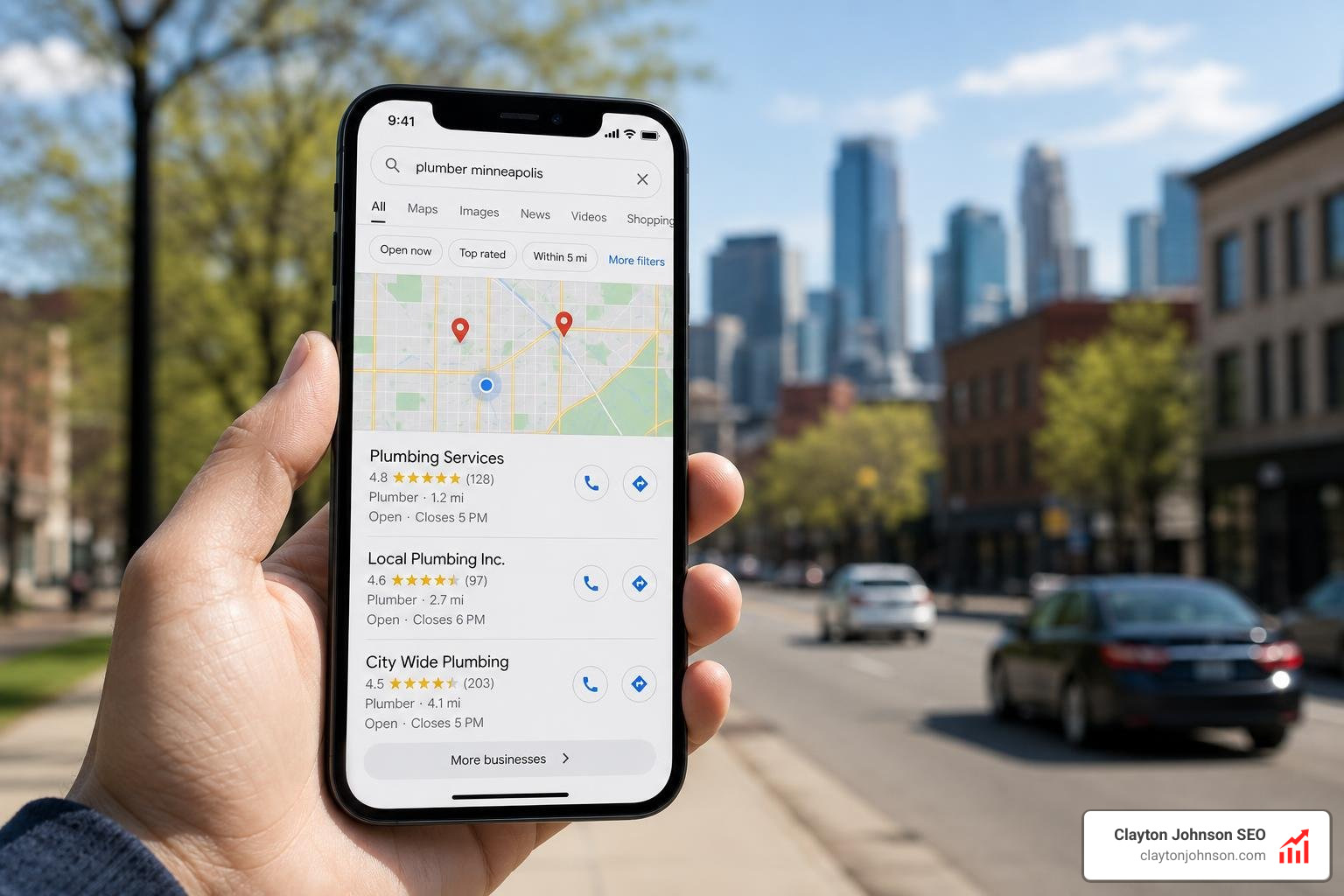
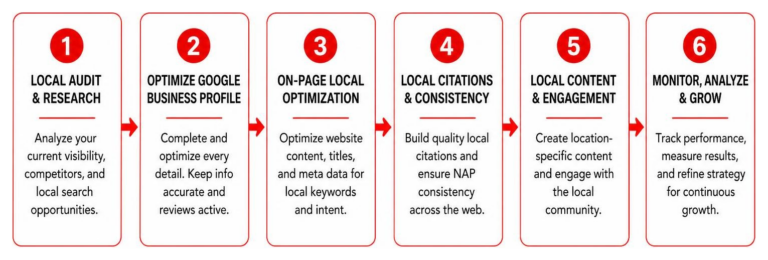
Getting your business into this coveted space requires a dedicated local SEO strategy. Local SEO differs from national SEO because it heavily weights physical proximity, local citations, and user reviews. If you are running a specialized local business, you might find our guides highly relevant, such as Local SEO Secrets for Your Dental Practice or The Secret Sauce for Local SEO Success.
To help you audit your own current digital presence, here is a list of the most common website and SEO mistakes local businesses make:
- Ignoring Mobile Load Speed: Letting bloated images and heavy code slow down your mobile site.
- Missing or Inconsistent NAP Data: Having different phone numbers or addresses listed across the web.
- Thin or Duplicate Content: Copying service page text from other websites or leaving pages nearly empty.
- Neglecting Google Business Profile: Leaving your profile unverified, incomplete, or inactive.
- Failing to Build Local Backlinks: Relying entirely on generic directories instead of earning links from local Minnesota organizations.
Optimizing Your Google Business Profile for Maximum Visibility
Your Google Business Profile (GBP) is the single most important asset for local search visibility. When optimized correctly, it can drive a massive increase in phone calls, website clicks, and physical visits.
To maximize your GBP visibility, follow these steps:
- Claim and Verify Your Listing: Ensure you have full ownership of your profile.
- Select Accurate Categories: Choose your primary business category carefully, as this heavily influences what searches you rank for. Add relevant secondary categories to capture broader searches.
- Keep Your NAP Consistent: Ensure your Name, Address, and Phone number (NAP) are identical to the contact information listed on your website and other online directories.
- Publish Weekly Updates: Use Google Business posts to share updates, promotions, and helpful tips. This signals to Google that your business is active.
- Add High-Quality Photos: Upload real photos of your team, office, and completed projects. Businesses with photos receive significantly more requests for directions and website clicks.
- Implement a Review Response System: Actively ask satisfied customers for reviews, and respond to every review (both positive and negative) within 24 hours.
For official troubleshooting and detailed setup instructions, you can visit the Google Business Profile Help center.
Hyper-Local Content and Suburban Targeting Strategies
If your business serves the wider Minneapolis-St. Paul metro area, you cannot rely on a single homepage to rank for every surrounding suburb. A contractor based in Northeast Minneapolis still wants to win jobs in Edina, Minnetonka, Bloomington, and Woodbury.
To capture this suburban search traffic, we build dedicated city landing pages. These are highly optimized service pages tailored to specific municipalities. For example, rather than having one generic “Plumbing Services” page, we might build individual pages for “Plumbing Services in Bloomington” and “Emergency Plumber in Minnetonka.”
However, these pages must not be low-quality, duplicate templates where you simply swap out the city name. Google easily detects “doorway pages” and will penalize your site. Instead, each city page should feature unique, local content:
- Mention local landmarks, neighborhood names, or regional building codes.
- Showcase reviews or testimonials from clients located in that specific suburb.
- Embed a Google Map of your service area in that city.
Additionally, you need to build local authority through targeted backlinks from regional websites, local chambers of commerce, and Twin Cities business blogs. To master this local link-building process, read our guides on how to Stop Being Invisible With These Local Backlink Strategies and our Step-by-Step Guide to Local SEO for Acupuncturists.
Choosing the Right Partner and Understanding the Investment
Investing in your digital presence is a major decision for any small business. Because the market is filled with varying agencies, freelancers, and automated platforms, it is important to understand exactly what you are paying for and how to measure success.
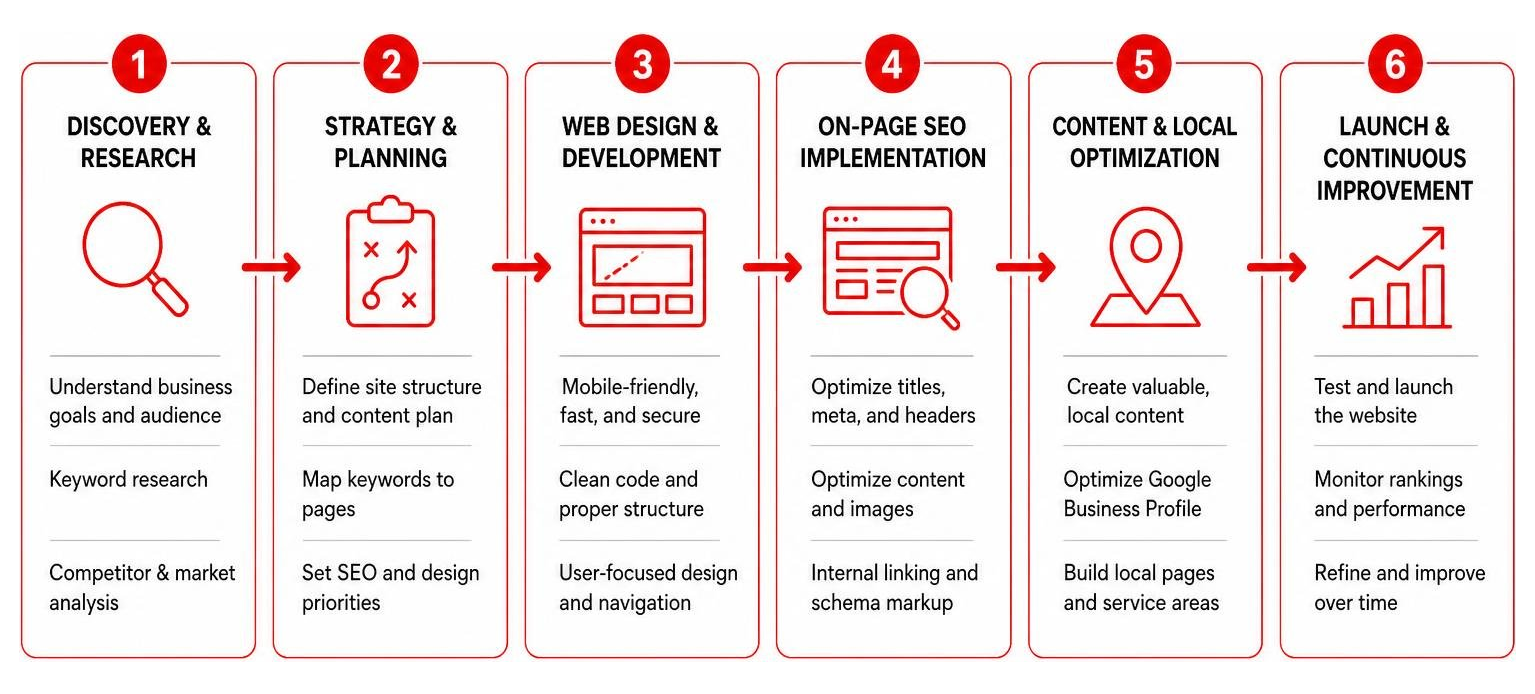
To help you navigate this process, you can read our resources on finding the Best SEO Agency Minneapolis Has to Offer and working with a Top Minneapolis SEO Specialist.
Here is a quick breakdown of the common web design and SEO pricing models you will encounter:
| Service Type | Pricing Structure | Typical Cost Range | Best For |
|---|---|---|---|
| Custom WordPress Web Design | One-time flat fee | $3,500 – $10,000+ | Businesses looking for a unique brand, fast speeds, and full ownership. |
| Local SEO Monthly Retainer | Monthly ongoing fee | $750 – $2,500 / month | Businesses in competitive markets looking for continuous growth and map rankings. |
| Hourly Consulting / Setup | Flat hourly rate | $85 – $225 / hour | Minor technical fixes, audits, or specific campaign setups. |
What to Look For in a Minneapolis SEO Web Design Agency
When evaluating potential agencies to build and optimize your website, do not just look at their portfolio of pretty designs. Ask tough questions about their technical capabilities and business practices.
Here are the key factors you should look for:
- 100% Ownership Rights: Ensure that your contract explicitly states that you own your domain, design files, content, and hosting account. Avoid agencies that build your site on proprietary, closed systems where you have to pay a monthly fee forever just to keep your site online.
- Direct Communication: Look for a lean agency model where you can speak directly with the designers and search strategists working on your project, rather than being passed around multiple layers of junior account managers.
- Proven Performance Metrics: Ask to see real Google Lighthouse speed audits of their own website and past client sites. If an agency pitches “speed and performance” but their own website fails basic speed tests, they are not practicing what they preach.
- Ethical “White-Hat” SEO Practices: Avoid any agency that “guarantees” a #1 ranking on Google. Google’s algorithm changes thousands of times a year, and no one can guarantee a specific spot. Honest agencies focus on sustainable, data-driven strategies that build long-term authority.
For a comprehensive checklist of what to ask before signing a contract, read A Local Guide to Building Digital Authority Without Losing Your Mind.
Cost and Timeline Expectations for Local Businesses
Building a professional website and ranking it on search engines is a marathon, not a sprint.
For a standard, custom-designed local business website (typically 5 to 15 pages), the design and development phase usually takes 2 to 4 weeks (or up to 8 weeks for larger, more complex sites).
Once the site is launched, SEO typically takes 3 to 6 months to show measurable improvements in organic traffic and local search visibility. Significant, compounding growth usually occurs between months 6 and 12. This timeline is necessary because search engines need time to crawl your new content, index your pages, evaluate your local citations, and build trust in your brand.
While paid advertising (PPC) can generate leads within days, SEO is a long-term, compounding asset. Once you rank organically, you do not pay Google for every click, resulting in a much higher return on investment (ROI) over time. To explore our specific optimization packages, visit our Services/SEO Services page.
Frequently Asked Questions about Minneapolis Digital Marketing
How long does it take to see results from seo minneapolis web design?
Most Minneapolis businesses start seeing measurable improvements in local map pack visibility and organic search rankings within 3 to 6 months. Because local search algorithms heavily prioritize proximity and Google Business Profile optimization, local map rankings often improve faster than traditional organic website rankings.
What industries in Minneapolis benefit most from combined web design and SEO?
Any business that relies on local or regional customers to generate revenue benefits significantly from integrated web design and SEO. This includes:
- Professional Services: Law firms, accounting practices, and consulting agencies.
- Home Services & Contractors: Plumbers, HVAC technicians, roofers, and remodelers.
- Healthcare Providers: Dental practices, medical clinics, and physical therapists.
- E-commerce Brands: Retailers looking to capture secure, 24/7 online sales.
Do I own my website and domain after the build is complete?
Yes, when working with us, you retain 100% ownership of your domain, website design files, content, and hosting account. We build on open-source platforms like WordPress to ensure your business is never locked into a proprietary system, giving you complete freedom and control over your digital assets.
Conclusion
Building a high-performing website in 2026 requires looking beyond basic templates and vanity metrics. To stand out in the highly competitive Twin Cities market, your digital presence must combine clean, responsive web design with a robust, forward-looking local SEO strategy.
At Clayton Johnson SEO, we help Minneapolis companies map and understand their target audiences through strategic content and technical SEO services. Whether you are looking to dominate the Google Maps 3-Pack, prepare your site for AI-driven search engines, or redesign an outdated platform into a conversion-focused asset, we are here to build your competitive advantage.
Ready to turn your website into a reliable source of growth? Contact us today to request a free consultation, or explore our specialized Minneapolis SEO services to see how we can help your business get found and grow.