The Core Pillars of Local Dentist SEO
Local dentist SEO is how your practice shows up when nearby patients search for a dentist on Google — and it directly controls how many new patients call your office each month.
Here’s a quick look at what local dentist SEO involves:
- Google Business Profile (GBP) — Your digital storefront on Google Maps and Search
- Google Map Pack — The top 3 local listings that capture over 70% of all clicks
- Reviews — Quantity, recency, and responses all influence your ranking
- On-page SEO — Local keywords on service pages, titles, and headings
- Citations — Consistent Name, Address, and Phone (NAP) across directories
- Local backlinks — Links from local organizations, directories, and partners
Think about how your next patient will find you. They open their phone, type “dentist near me,” and pick from the first few results they see. They’re not browsing. They’re ready to book.
The problem? Most dental practices are invisible in those results — not because they’re bad at dentistry, but because they haven’t optimized for local search.
The top 3 spots in Google Maps capture more than 70% of clicks. If your practice isn’t there, a competitor is getting those patients instead.
The good news: local SEO is learnable, and the steps are more straightforward than most dentists expect.
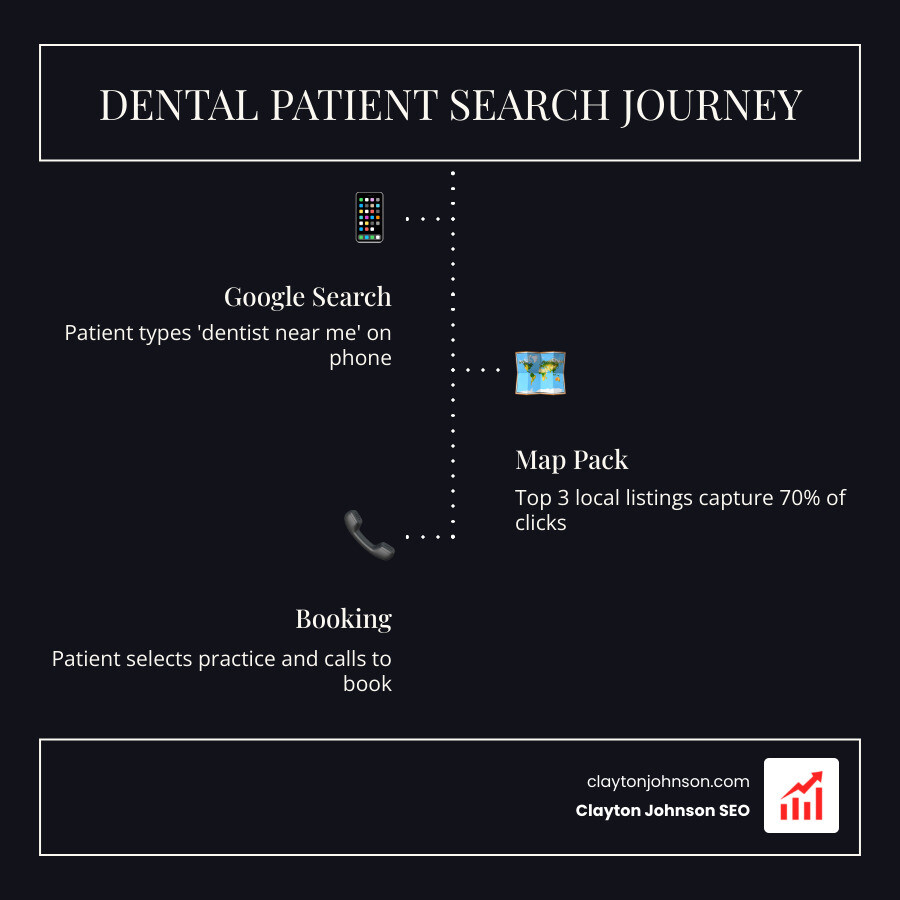
Before we dive into the “secrets,” we need to understand the foundation. Google doesn’t pick local winners at random. It uses a specific set of criteria to determine which dental practice deserves the top spot.
When a patient searches for a “dentist in [City],” Google’s algorithm balances three primary factors:
- Proximity: How close is your office to the person searching?
- Relevance: Does your profile and website content match what the user is looking for (e.g., “emergency tooth extraction” vs. “teeth whitening”)?
- Prominence: How well-known and trusted is your practice online? This is measured by reviews, backlinks, and mentions across the web.
Research shows that the top three listings in Google Maps capture more than 70% of all clicks. If you aren’t in that “Local 3-Pack,” you are essentially invisible to the majority of high-intent searchers.
Furthermore, because dental services fall under Google’s YMYL (Your Money or Your Life) category, the search engine holds your website to a higher standard of E-E-A-T (Experience, Expertise, Authoritativeness, and Trustworthiness). Google wants to ensure they aren’t sending a patient with a dental emergency to a fly-by-night operation. Building this trust is a core component of medical practice SEO, where clinical accuracy and professional reputation are paramount.
Secret 1: Dominating the Map Pack for Local Dentist SEO
The Map Pack (also known as the Local 3-Pack) is the holy grail of local dentist SEO. It is the block of three business listings that appear below the map in a Google search.
Why is it a secret weapon? Because 48% of all clicks go to a Map Pack listing. Even more impressively, businesses in the Google Map Pack see 93% more calls and 126% more traffic than those that rely solely on traditional organic results.
To dominate this space, we focus on a user-first experience. Google tracks how users interact with your listing. If people click your “Call” button or “Directions” link frequently, Google views your practice as a helpful result and keeps you at the top. High click-through rates (CTR) are a massive signal of relevance.
To improve your Map Pack standing:
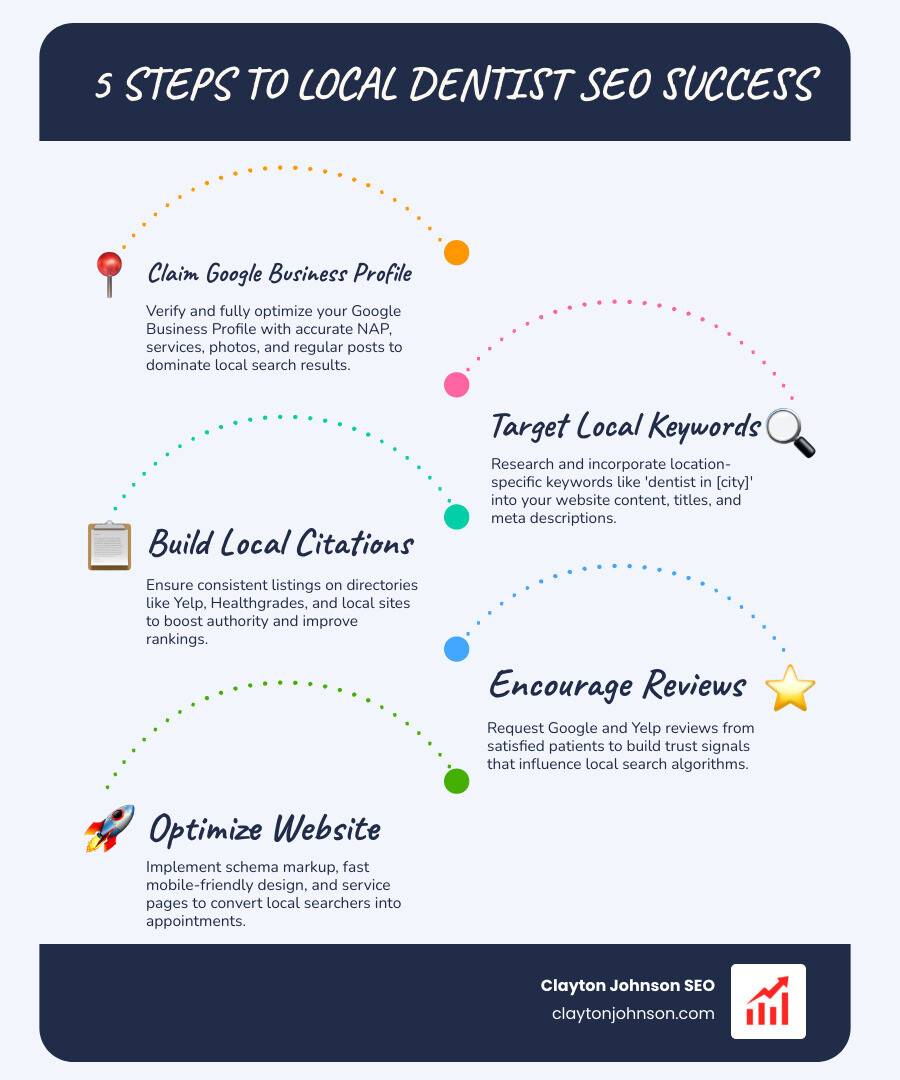
- Ensure your primary category is set correctly (e.g., “Dentist” or “Orthodontist”).
- Use high-resolution photos of your lobby and staff to make the listing “clickable.”
- Keep your hours updated, especially for holidays, to avoid “user frustration” signals.
Secret 2: Converting Patients with an Optimized Google Business Profile
If the Map Pack is the billboard, your Google Business Profile (GBP) is the digital storefront. It is often the very first thing a potential patient sees—even before they visit your website.
A complete profile isn’t just a “nice-to-have.” Data indicates that users are 70% more likely to click a complete GBP. If your profile is missing photos, has an incorrect phone number, or lacks a description of your services, patients will move to the next listing in a heartbeat.
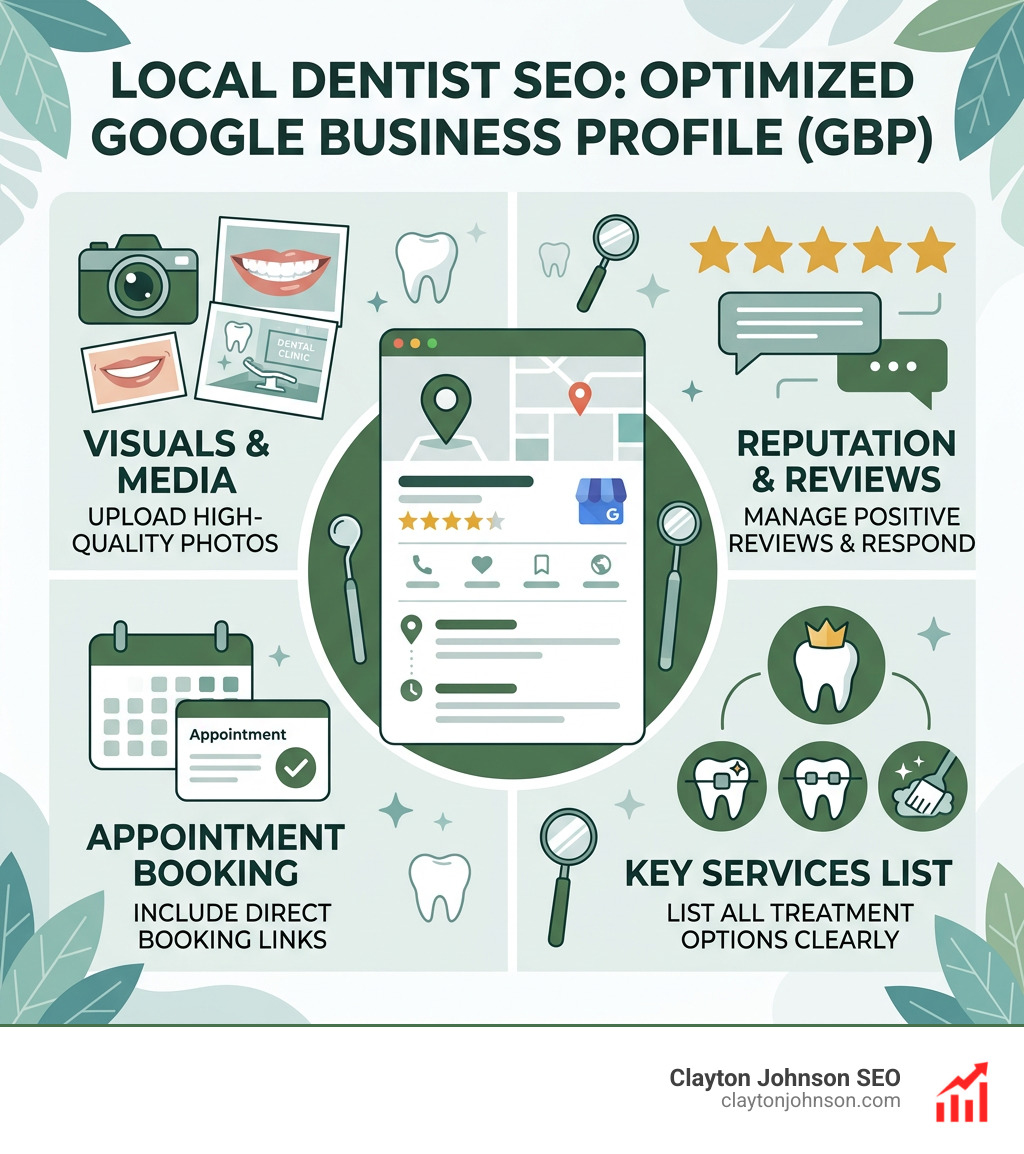
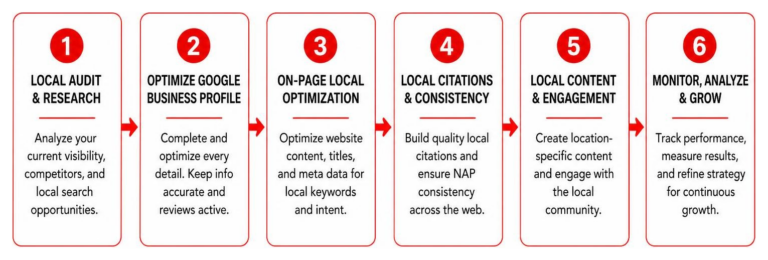
To fully optimize your GBP, we recommend these steps:
- NAP Consistency: Your Name, Address, and Phone number must be identical to what is on your website.
- Service Categories: Don’t just pick “Dentist.” Add secondary categories like “Cosmetic Dentist,” “Pediatric Dentist,” or “Dental Implants Periodontist” to capture specific searches.
- Appointment Links: Use a direct link to your booking software or contact page.
- Business Description: Treat this as your 750-character elevator pitch. Mention your city and your most popular treatments.
Around 62% of users shy away from listings with inaccurate or mismatched information. Don’t let a simple typo in your address cost you a new patient.
Secret 3: Leveraging Review Velocity for Search Prominence
Reviews are the lifeblood of trust in the dental industry. Nearly 53% of people lean on and believe online reviews as much as personal recommendations. But for local dentist SEO, reviews are more than just social proof—they are a ranking signal.
Google looks at three specific things regarding reviews:
- Quantity: How many do you have? (100+ is generally considered “strong”).
- Velocity: How often are you getting new ones? A practice with 500 reviews from three years ago looks “dead” compared to a practice with 50 reviews from the last month.
- Diversity: Are patients mentioning specific services like “Invisalign” or “root canal”? These keywords within reviews help Google understand your relevance for those specific terms.
We suggest a proactive response strategy. Reply to every review—the good, the bad, and the ugly. When you respond to a positive review, thank the patient by name. When you respond to a negative one, remain professional and offer to move the conversation offline. This shows potential patients (and Google) that you are an active, patient-focused practice.
Secret 4: Strategic Keyword Mapping for Local Dentist SEO
Many dentists make the mistake of trying to rank for broad terms like “best dentist.” While that’s great, it’s also incredibly competitive. The “secret” lies in intent modeling and geo-modifiers.
Effective keyword research for dentists involves combining Service + Location. Examples include:
- “Teeth whitening in [Neighborhood Name]”
- “Emergency dentist near [Local Landmark]”
- “Affordable dental implants [City]”
If you are a specialist, your strategy needs to be even more surgical. For instance, an orthodontist SEO strategy should focus on high-intent long-tail phrases like “Invisalign cost for teens” or “clear braces in [City].”
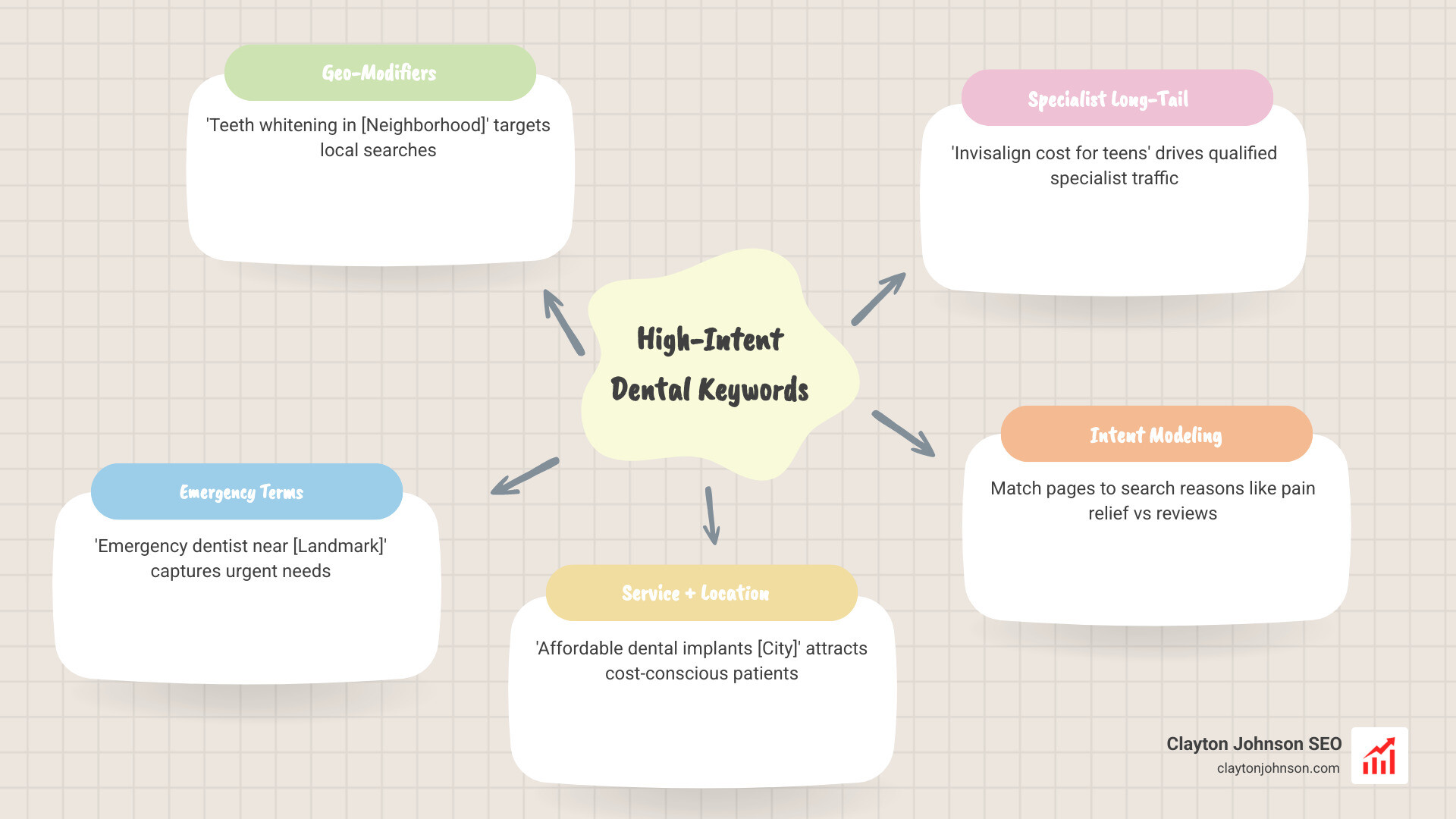
We use intent modeling to understand why someone is searching. A person searching for “toothache relief” has a different intent than someone searching for “dentist reviews.” Your website should have dedicated service pages for each major treatment you offer, allowing you to map these specific keywords to individual pages.
Secret 5: Technical Authority and Local Schema Implementation
You can have the best content in the world, but if your website takes 10 seconds to load on a mobile phone, you will never rank. Google has moved to mobile-first indexing, meaning it primarily looks at the mobile version of your site to determine rankings.
We use tools like Google PageSpeed Insights to ensure our dental clients’ sites are lightning-fast. A target load time of under 2.5 seconds is the industry gold standard.
Another technical “secret” is Schema markup for local business. Schema is a hidden bit of code that tells Google exactly what your data means. Instead of Google guessing what your phone number is, Schema explicitly says, “This is the phone number for this dental office.” It can also help your star ratings appear directly in the search results, which significantly boosts your click-through rate.
Secret 6: Building Digital Moats with Citations and Backlinks
In local dentist SEO, your reputation isn’t just about what you say; it’s about who else says it. This is where citations and backlinks come in.
Citations are mentions of your practice on other websites like Yelp, Healthgrades, or the Yellow Pages. The critical factor here is keeping your NAP (Name, Address, Phone) identical on all online platforms. If one directory says “123 Main St.” and another says “123 Main Street,” Google gets confused and may lower your trust score.
Backlinks are links from other websites to yours. For a dentist, the best backlinks are local. Think:
- Sponsoring a local Little League team.
- Being listed in high-authority dental directories like the American Dental Association.
- Partnering with a local health blogger for a guest post.
These local links act as a “digital moat,” making it harder for competitors to displace you. They signal to Google that you are a pillar of the local community, not just another website on the internet.
Scaling Your Practice with Clayton Johnson SEO
At Clayton Johnson SEO, we don’t believe in “set it and forget it” marketing. We build durable systems designed for compounding growth. Local SEO isn’t a one-time project; it’s an ongoing process of refining your technical architecture, expanding your content ecosystem, and strengthening your local authority.
Our approach combines strategic consulting rigor with AI-enhanced workflows to ensure your practice isn’t just “present” online, but dominant. We focus on measurable business impact—meaning we care more about how many new patients are in your chairs than how much “vanity traffic” your blog is getting.
If you’re ready to stop guessing and start growing, we invite you to Request a Free Dental Local SEO Audit. We will take a deep dive into your current rankings, analyze your local competitors, and show you exactly where you’re losing patients.
Whether you are looking to scale your practice with professional SEO services or simply want to understand the gaps in your digital strategy, our team is here to help. Clarity leads to structure, and structure leads to leverage. Let’s build your growth engine together.
Contact our strategy team today to begin.