Beyond Content: How AI SEO Tools Automate Your Workflow

Why AI SEO Tools Are Redefining Search Optimization
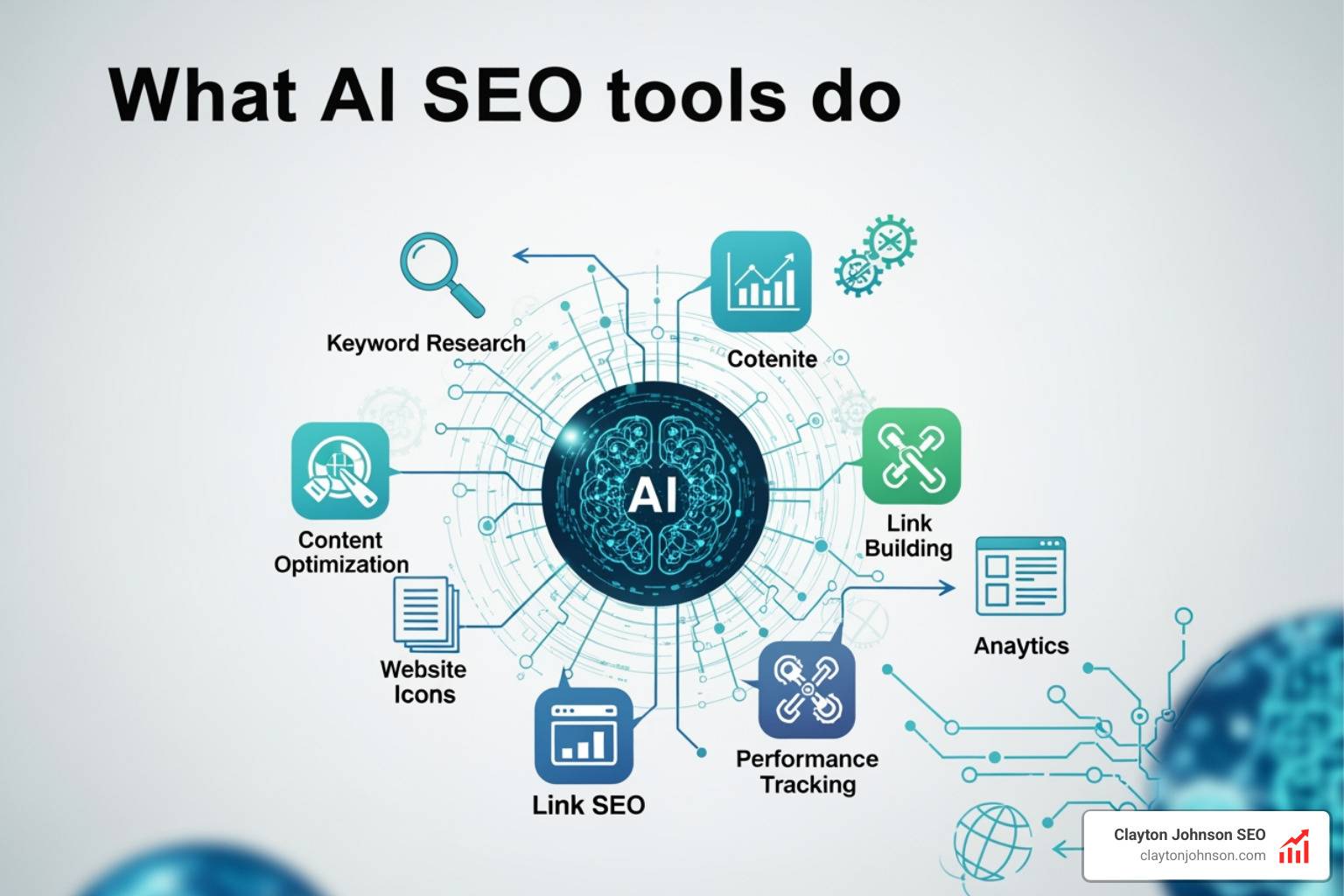
What AI SEO tools do extends far beyond generating blog posts. These platforms automate keyword research, track your visibility in AI-generated search results like Google AI Overviews and ChatGPT, optimize content structure using natural language processing, identify technical SEO issues, streamline link-building outreach, and generate multi-source reports—all while integrating real-time SERP data that generic LLMs can’t access.
Core functions of AI SEO tools:
- Keyword Research & Clustering – Automate intent mapping and semantic grouping at scale
- Content Optimization – Score drafts against top-ranking pages using NLP analysis
- Technical SEO Automation – Scan, diagnose, and fix indexing and crawlability issues
- Generative Engine Optimization (GEO) – Track brand mentions inside AI answer engines like Perplexity and ChatGPT
- Link Building Workflows – Automate prospect discovery, outreach personalization, and follow-ups
- Reporting & Analytics – Blend data from Google Search Console, Ahrefs, Semrush, and GA4 into branded dashboards
Most SEO professionals still treat AI as a content assistant. They’re missing the bigger picture.
AI SEO tools aren’t just writing faster—they’re diagnosing visibility gaps, predicting ranking opportunities, and automating workflows that used to require entire teams. The shift from traditional SEO to AI-augmented strategy isn’t about replacing humans. It’s about building systems that compound authority faster than manual execution ever could.
The best tools combine real-time SERP scraping with machine learning models that analyze search intent, competitor positioning, and technical health. They don’t just suggest keywords—they map content architecture. They don’t just generate drafts—they optimize entity relationships and structured data for both Google and LLMs.
But here’s the problem: not every tool labeled “AI-powered” actually delivers strategic value. Many are glorified content spinners. Others promise GEO tracking but lack the specificity to measure regional AI answer variations or sentiment shifts. Some automate reporting but miss the integration depth agencies need to serve multiple clients efficiently.
The market is noisy. The stakes are high. And the difference between tools that accelerate growth and tools that waste budget comes down to understanding what these platforms actually do—and which workflows they genuinely improve.
I’m Clayton Johnson, and I’ve spent years building AI-augmented SEO systems that prioritize structured growth over tactical shortcuts. My focus is on engineering scalable visibility frameworks that align what AI SEO tools do with measurable business outcomes—not just rankings, but authority, discoverability, and strategic leverage.
This guide evaluates the platforms that automate real SEO workflows: content optimization engines, GEO trackers, technical audit systems, link-building tools, and reporting platforms. You’ll see which tools solve specific problems, where they fall short, and how to build a stack that compounds results instead of adding operational drag.
Important what ai seo tools do terms:
Understanding What AI SEO Tools Do Beyond Basic Writing
To truly grasp what AI SEO tools do, we have to look past the chat box. While a general Large Language Model (LLM) like ChatGPT generates text based on historical patterns, specialized AI SEO tools utilize machine learning and real-time data processing to analyze the live web. This is the fundamental difference: traditional tools tell you what happened; AI tools predict what will happen and automate the “how.”
The core of this evolution is the truth about AI SEO and why it matters: it’s about leverage. Platforms like AirOps allow teams to build custom workflows that treat SEO as a series of data-driven steps rather than a creative guessing game. Instead of manually checking every page for a content gap, AI agents can audit thousands of URLs against current SERP leaders in minutes.
Furthermore, these tools help us navigate Google’s guidance on AI-generated content. Google doesn’t penalize AI content; it penalizes unhelpful content. AI SEO tools ensure your output is grounded in predictive analytics—identifying the exact entities, headings, and data points required to satisfy both search algorithms and human users.
How content tools show what AI SEO tools do for rankings
Content optimization is where we see the most immediate ROI. Tools like Writesonic use Natural Language Processing (NLP) to perform deep semantic relevance checks. They don’t just look for keyword density; they perform topic modeling to ensure your article covers a subject with the same breadth as the top three ranking pages.
By following an AI content optimization guide, we can use platforms like MarketMuse to generate comprehensive content briefs. These briefs tell a writer exactly which subtopics are missing from their draft. This “entity-based” approach is why optimized articles often rank faster and higher than those written without data-backed guardrails.
Evaluating the accuracy of AI-driven keyword research
Traditional keyword research is often a manual slog through spreadsheets. What AI SEO tools do differently is search intent mapping at scale. Keyword Insights, for example, groups thousands of keywords into clusters based on SERP similarity. If two keywords show the same search results, the AI tells you to target them with one page, preventing content cannibalization.
This allows us to automate your success using AI-driven keyword optimization. Tools like Frase perform competitive gap analysis, identifying specific questions your competitors are answering that you are not. This isn’t just “finding keywords”—it’s mapping the entire information architecture of a niche.
Top Platforms for Content Optimization and Strategy
The market for optimization tools is crowded, but a few “gold standard” platforms stand out for their ability to provide live, actionable data. These tools offer a real-time content scoring interface that updates as you write, ensuring your draft hits the necessary semantic benchmarks before you ever hit “publish.”
- Surfer SEO: The gold standard for balancing NLP analysis with usability. Its Content Editor provides a checklist of keywords, headings, and image counts based on real-time SERP analysis.
- Clearscope: Built for precision-driven editorial teams. It focuses on “content grading” (A+ to F) to ensure your article is the most comprehensive resource on the web.
- Rankability: Combines IBM Watson and Google NLU to provide highly accurate keyword recommendations and expert coaching.
- NeuronWriter: An excellent budget-friendly alternative that uses semantic models to identify gaps in your content vs. competitors.
- Outranking: A comprehensive tool that assists with every step, from research and first drafts to metadata and internal linking automation.
Scaling production with an AI blog writer
For many businesses, the bottleneck isn’t strategy—it’s execution. This is where an AI blog writer becomes essential. The eesel AI blog writer specializes in creating publish-ready articles that follow your specific brand voice. It doesn’t just “spin” content; it structures it with proper H2s, H3s, and FAQ sections that search engines love.
When you use top AI content audit tools for smarter websites, you can identify which existing pages need a refresh and use tools like Jasper to rewrite them in bulk. This allows a small team to manage a library of content that would normally require a dozen full-time writers.
Why real-time data integrations beat static LLMs
If you use a basic chatbot for SEO, you’re working with “stale” data. Search algorithms change weekly. What AI SEO tools do to solve this is integrate with live SERP scraping via APIs like DataForSEO. This ensures your recommendations are based on what is ranking today, not what was in a training set two years ago.
For instance, an Anthropic Claude SEO strategy combined with live data from Semrush allows us to see new competitor ranking spikes in real-time. Semrush’s “Copilot” feature even alerts you to technical issues like missing H1 tags or 4xx errors as they happen, acting as an automated site guardian.
Automating Technical SEO and Generative Search Visibility
Technical SEO has traditionally been the most “human-intensive” part of the job. However, new AI tools are automating the “audit-to-fix” pipeline. Platforms like Alli AI allow you to deploy technical fixes—like updating meta tags or fixing broken internal links—across thousands of pages instantly, without waiting for a developer.
| Feature | Traditional SERP Tracking | GEO (Generative Engine Optimization) |
|---|---|---|
| Primary Goal | Rank #1 in blue links | Get cited in AI answers (ChatGPT, AIO) |
| Metric | Position (1-100) | Brand Mention & Sentiment Score |
| Data Source | Google Search Results | LLM Training Data & Live Crawls |
| Accuracy | High (Static) | Variable (Personalized/Fluid) |
Tools like Indexly and Screaming Frog’s SEO Spider are also evolving. You can now add your AI API key to Screaming Frog to automatically generate image alt text or meta descriptions during a crawl. This turns a standard AI-driven SEO audit into an automated repair mission.
Tracking visibility to see what AI SEO tools do in generative search
The new frontier is Generative Engine Optimization (GEO). We are no longer just fighting for “Position 1”; we are fighting to be the source cited by Perplexity.ai or Google’s AI Overviews. Rankscale.ai is a specialist tool built for this exact purpose. It tracks whether your brand appears in AI answers and analyzes the “sentiment” of those mentions.
Similarly, the SE Ranking AI overviews tracker provides a “Brand Performance” dashboard. It shows you exactly which prompts trigger an AI Overview and whether your site is being linked as a primary source. This is critical because AI search results are hyper-personalized; traditional rank trackers often miss these “zero-click” visibility shifts.
Improving indexing and crawlability with automation
If search bots can’t find your content, it doesn’t matter how good the AI writer was. Indexly automates the indexing process for Google, Bing, and Yandex. Instead of waiting weeks for Google Search Console to “catch up,” Indexly pushes your new URLs directly to the search engines, often getting pages indexed in hours.
Using the top automated SEO audit tools for faster rankings ensures your site’s technical health is monitored 24/7. Complementing this with NitroPack automates page speed optimization—handling code minification and image compression—so your site meets the “Core Web Vitals” required for top-tier rankings.
Streamlining Link Building and Reporting Workflows
Link building is the most difficult part of SEO to automate because it requires human trust. However, AI is making the “prep work” much faster. Platforms like Ranking Raccoon act like “Tinder for backlinks,” matching high-quality sites for community exchanges. According to their data, customers enjoy a 71% reply rate within a week.

For cold outreach, Pitchbox and Postaga use AI to find prospects and personalize emails. Instead of sending generic templates, these tools can scrape a prospect’s latest blog post and reference it in the first line of your email. Furthermore, Link Whisper automates your internal linking, using AI to suggest relevant pages to connect within your own site, which boosts crawlability and link juice distribution.
Automating agency reporting with AI summaries
Reporting is often the biggest “time-sink” for agencies. What AI SEO tools do to fix this is “data blending.” Whatagraph allows you to pull data from GSC, Ahrefs, and social media into one branded template. Their AI features can then generate a written summary of the month’s performance in 18 different languages.
In documented industry case studies, teams have saved 100 hours a month on reporting by using these AI summaries. This is the essence of the lazy marketer guide to automated SEO reporting: let the machines handle the data entry so you can focus on the strategy.
Building custom AI workflows for niche SEO tasks
Sometimes, off-the-shelf tools aren’t enough. That’s when we build custom “agents.” Using Make.com and Python code generation with AI made easy, we can create workflows that scrape competitor backlinks and automatically categorize them by “link quality.”
Industry case studies highlight this perfectly: practitioners have built competitor analysis workflows using APIs that identified content gaps in real-time. This level of customization is what separates basic users from “Power SEOs.” By engineering these systems, you create a “growth architecture” that compounds over time.
Conclusion
At the end of the day, what AI SEO tools do is provide leverage. Whether you’re a small business in Minneapolis or a global agency, the goal is the same: to move from manual tactics to a structured growth architecture. This is exactly why we are building Demandflow.ai—to provide founders and marketing leaders with a growth operating system that combines strategic frameworks with AI-augmented workflows.
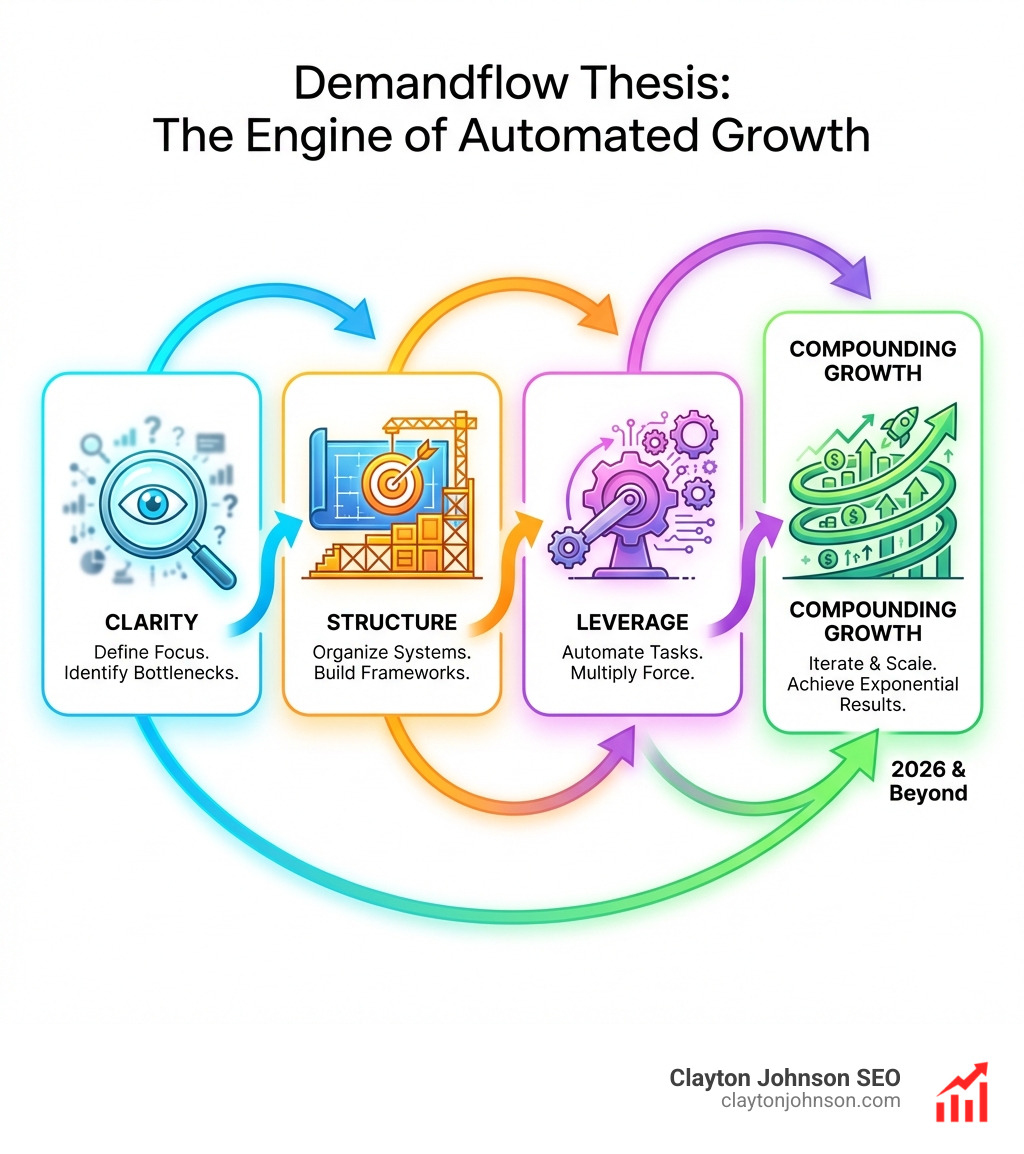
If you’re still wondering which AI SEO platform is your perfect match, start by identifying your biggest bottleneck. Is it content production? Technical debt? Reporting? Once you solve the bottleneck with the right tool, you gain the strategic leverage needed for compounding growth. For a deeper dive into the future of search, explore our AI Search and SEO Strategy resources.
Can AI tools replace dedicated SEO platforms?
The short answer is: No. While AI is powerful, it still requires real-time data and human strategy. You can’t rely on ChatGPT alone because it lacks the live SERP integrations found in platforms like Ahrefs or Semrush. The most successful SEOs use a “hybrid workflow”—using AI to handle the volume and humans to handle the “why.” You must stop guessing and start ranking with these AI SEO tools by integrating them into a data-backed system.
How do you select the right tool for a small business?
For small businesses, the focus should be on ROI and ease of use. You don’t need a $500/month enterprise suite to see results. You can boost your rankings with these free SEO AI tools and affordable plans from platforms like Indexly ($14/mo) or Rankscale ($20/mo).
When evaluating a tool, look for a free trial and a clear pricing model that scales with your traffic. The right tool isn’t the one with the most features; it’s the one that fits your specific growth infrastructure and allows you to out-execute the competition without burning out your team.