How to use AI for on-page SEO that actually ranks

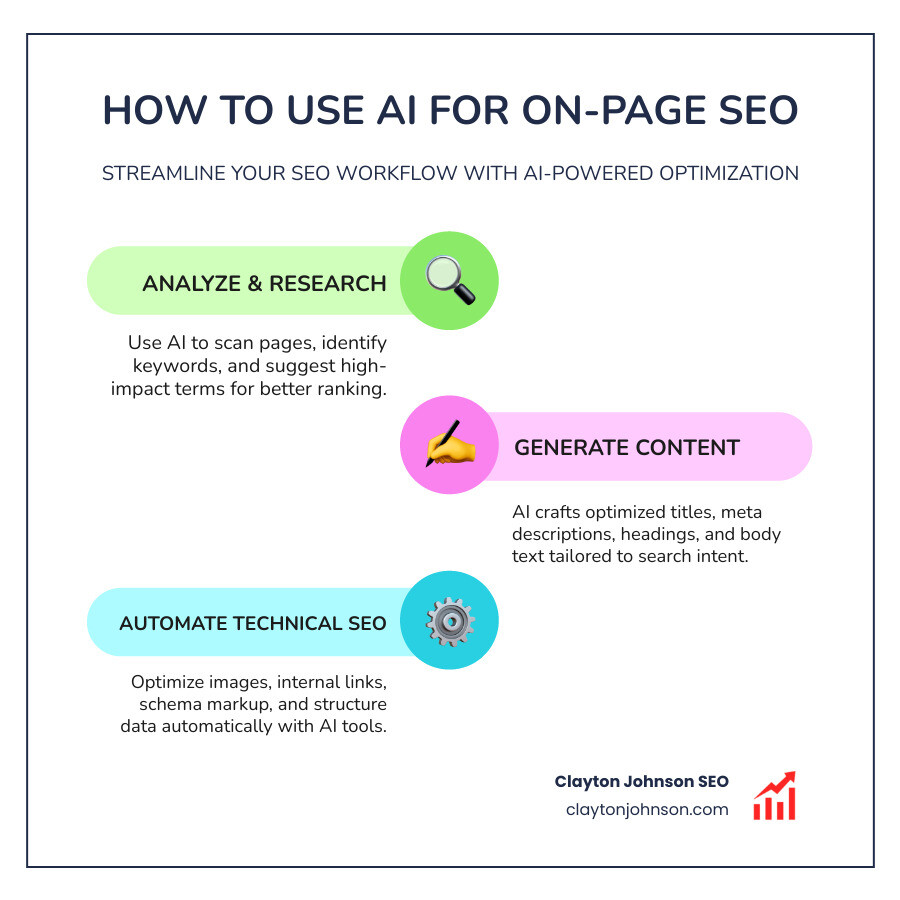
How to use AI for on-page SEO starts with understanding that search engines now interpret content like humans do—through context, intent, and semantic relevance, not just keywords. Here’s the quick framework:
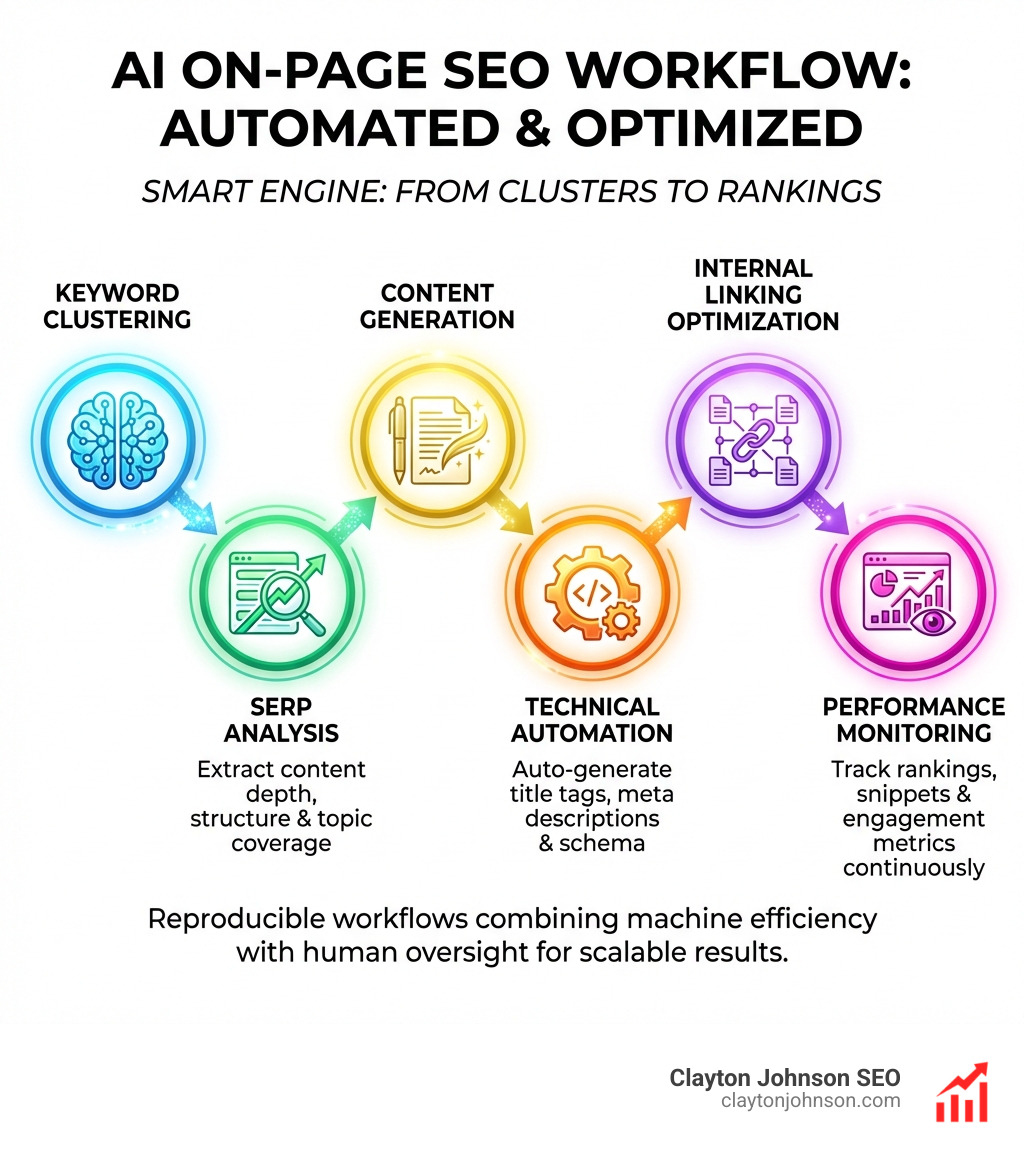
- Use AI for keyword clustering → Group intent-driven terms and semantic variants
- Analyze top-ranking pages → Extract content depth, heading structure, and topic coverage
- Automate technical elements → Generate title tags, meta descriptions, schema markup, and alt text
- Optimize internal linking → Map semantic relationships and distribute link equity
- Monitor and refine continuously → Track AI Overview appearances, featured snippets, and engagement metrics
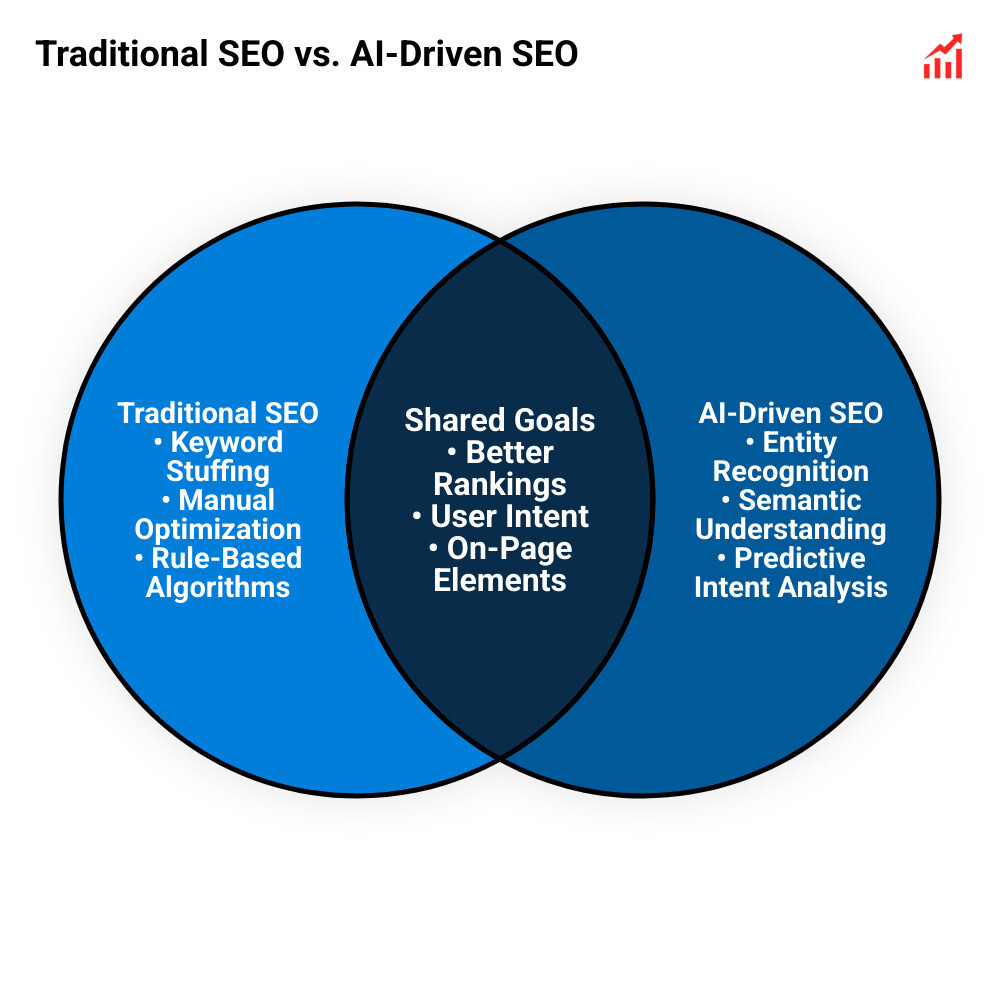
The shift is fundamental: traditional SEO optimized for algorithms. AI-powered on-page SEO optimizes for how language models understand and surface content. That means moving beyond keyword density toward semantic clarity, entity recognition, and structured data that machines can parse and recommend.
According to recent industry data, 86% of SEO professionals now use AI tools daily, and 68% of marketers report using AI in SEO programs. The reason? AI automates 44.1% of core SEO tasks while delivering measurably better results—companies using AI report 49.2% better rankings after algorithm updates.
But here’s the problem most practitioners face: AI tools are everywhere, but structured workflows are rare. You can generate content briefs, optimize metadata, and analyze competitors—but without a system tying it together, you’re just automating chaos.
I’m Clayton Johnson, and I’ve spent years building AI-augmented SEO systems that treat on-page optimization as engineering infrastructure, not guesswork. My approach to how to use AI for on-page SEO focuses on reproducible workflows that combine machine efficiency with human strategic oversight—systems that scale without sacrificing quality or authority.
How to use ai for on-page seo glossary:
Understanding AI-Powered On-Page SEO vs. Traditional Methods
In the “old days” (which was basically last year), on-page SEO was a checklist of manual chores. You’d pick a keyword, sprinkle it in the H1, make sure it appeared in the first 100 words, and hope for the best. How to use AI for on-page SEO is a different beast entirely. It moves us from “keyword matching” to “entity and intent alignment.”
Semantic Relevance and Entity Recognition
Traditional methods focused on strings of text. AI-powered SEO focuses on things—or “entities.” Search engines now use Large Language Models (LLMs) to understand that if we are talking about “Mustang,” the surrounding words like “engine,” “horsepower,” and “Ford” imply a car, while “saddle” and “wild” imply a horse.
AI tools help us identify these semantic relationships. By using The Truth About AI SEO and Why It Matters, we can see that AI doesn’t just look for words; it looks for the meaning behind them.
Contextual Analysis and User Intent
Traditional SEO often struggled with intent. Is someone searching for “apple” looking for the fruit or the tech giant? AI analyzes the search results page (SERP) in real-time to predict user intent. Research on ML predicting user intent shows that machine learning models can now infer whether a user wants to buy something, learn something, or find a specific website with incredible accuracy.
How to Use AI for On-Page SEO: A Step-by-Step Workflow
We don’t just “use AI”; we build a pipeline. At Demandflow, we believe in structured growth architecture. This means every piece of content follows a machine-augmented path to ensure it’s not just “good,” but mathematically relevant to what search engines want to surface.
Step 1: Foundation – AI-Powered Keyword Research & Strategy
Before writing a single word, we use AI to find the gaps our competitors missed. Traditional tools give you volume and difficulty. AI tools give you opportunity. We look for “weak spots” in the SERP—places where low-authority sites are ranking because the content depth is lacking.
You can explore this further in The Future of Search with AI-Powered Keyword Research. The goal is to move from a flat list of keywords to a three-dimensional map of topics.
Step 2: Intent-Driven Content Briefs
AI can analyze the top 30 ranking pages in seconds. It identifies:
- Average word count
- Common subtopics (H2s and H3s)
- Question-based intent
- Missing semantic terms
By automating this, we save an average of 12.5 hours per week per marketer. That is time we can spend on high-level strategy rather than manual spreadsheet sorting.
How to use AI for on-page SEO keyword clustering
One of the most powerful ways to use AI is through keyword clustering. Instead of creating 50 different pages for 50 slightly different keywords, we use embeddings to group queries by intent.
For example, “how to use ai for seo” and “ai seo strategies” likely belong on the same page. AI helps us identify these clusters so we can build “pillar pages” that command topical authority. Automate Your Success Using AI-Driven Keyword Optimization is a great resource for setting up these automated clusters.
Analyzing Top-Ranking Pages for Content Structure
AI isn’t just for writing; it’s for reading. We use AI to “scrape” the structure of top-ranking pages. If the top five results for “how to use ai for on-page seo” all have an FAQ section and a comparison table, AI will flag that as a “content requirement.”
This ensures our readability scores and content depth match what Google’s “Helpful Content” system expects. You can find the Top AI tools for SEO keyword research and optimization to help automate this competitive benchmarking.
Automating Technical On-Page Elements with AI
Technical SEO used to be the bottleneck. Now, it’s the easy part. How to use AI for on-page SEO includes automating the “boring” stuff that actually moves the needle on Click-Through Rate (CTR).
Title Tags and Meta Descriptions
AI is exceptionally good at writing meta tags that balance search intent with “click appeal.” We can prompt an AI to: “Generate 5 title tag variations under 60 characters for the keyword ‘how to use ai for on-page seo’ that sound authoritative yet helpful.”
Header Tags and Readability
AI can scan your draft and suggest where to break up long paragraphs or where to insert an H2 that includes a secondary keyword. This improves the “machine scannability” of your page. AI crawlers are now used to index your site—if a machine can’t understand your structure, it won’t recommend it to a human.

How to use AI for on-page SEO technical automation
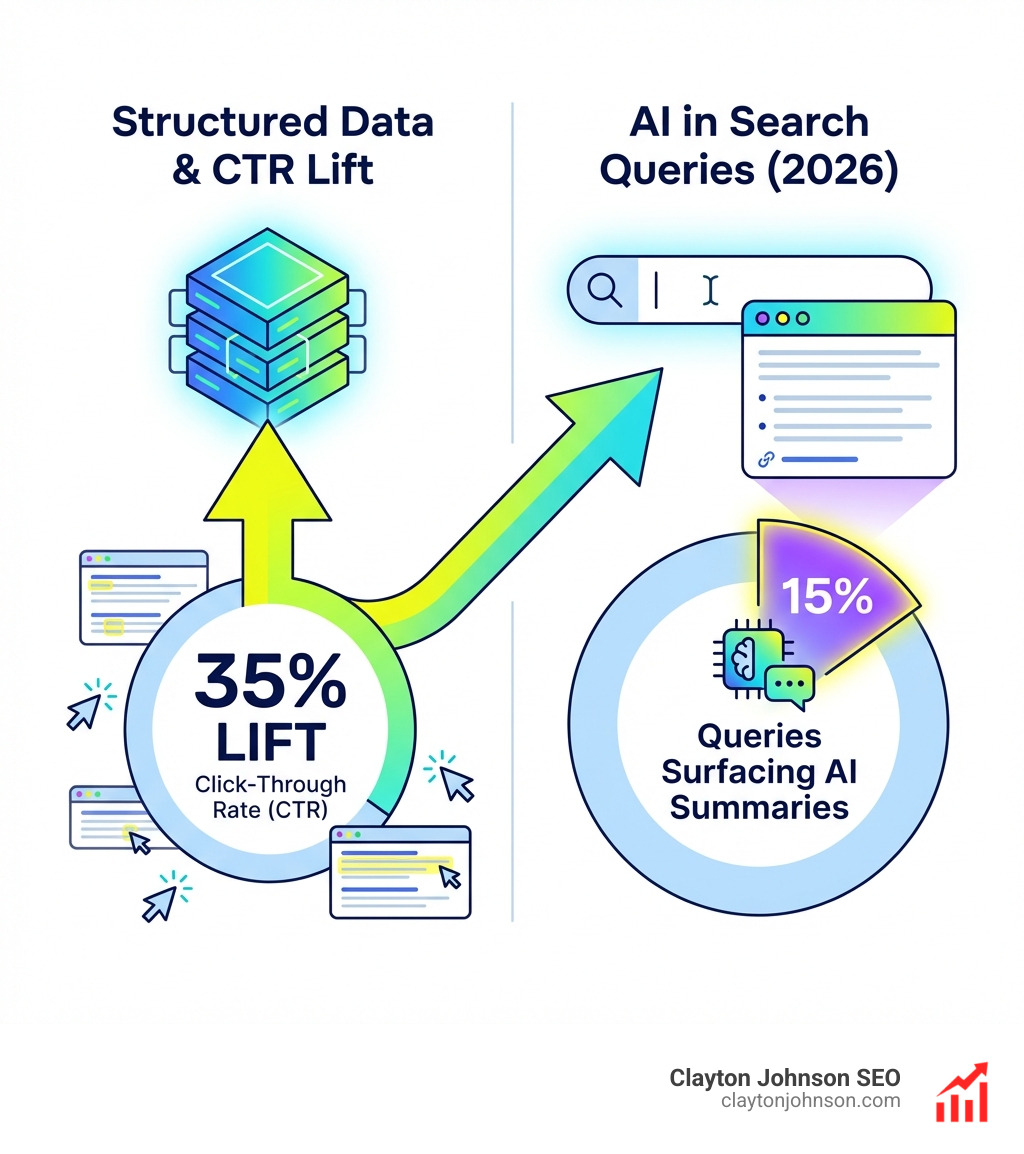
The “secret sauce” of modern on-page SEO is Structured Data (Schema). Schema tells search engines exactly what your content is. Fabrice Canel from Microsoft Bing recently stated that schema increases AI accuracy by 300% when grounding content.
We use AI to generate JSON-LD code for:
- FAQ Schema: To capture more real estate in the SERP.
- Article Schema: To signal E-E-A-T (Experience, Expertise, Authoritativeness, Trustworthiness).
- HowTo Schema: For step-by-step guides like this one.
Check out The Top Automated SEO Audit Tools for Faster Rankings to see how to audit your site for these technical gaps. Implementing this with AI SEO Optimization Made Simple: Your Step-by-Step Website Guide can turn a manual four-hour task into a ten-minute automated win.
Improving Internal Linking with AI Graphs
Internal links are the “roads” of your website. AI can analyze your entire content library and suggest where a new post should link to an old one based on semantic proximity. This reduces “orphaned pages” and distributes link equity (ranking power) across your site.
Using a Link Assistant powered by AI ensures that your anchor text is descriptive and helpful, which search engines love.
Scaling Success: Bulk Optimization and Human Oversight
When you have hundreds or thousands of pages, manual optimization is impossible. AI allows for bulk optimization. We can feed a list of 500 URLs into an AI pipeline and have it suggest meta description updates for all of them in minutes.
The Human-in-the-Loop Requirement
However, we must be careful. 49.2% of companies using AI report better rankings, but those are the companies that use human oversight. AI can “hallucinate” facts or lose your brand voice.
At Demandflow, we use Content Auditing for Humans Who Use Robots to ensure that every AI-generated suggestion is reviewed for:
- Accuracy: Did the AI make up a statistic?
- Brand Voice: Does it sound like us or a generic robot?
- E-E-A-T: Does it demonstrate real expertise?
Audience Simulation
Advanced AI can even simulate your target audience. You can ask an AI to “Read this article as a cynical Marketing Director in Minneapolis” and tell you where the content feels thin or unhelpful. This is the ultimate level of AI content strategy guide on audience simulation.
Frequently Asked Questions about AI On-Page SEO
Is AI-generated content safe for on-page SEO?
Yes, absolutely. Google has clarified that they reward high-quality, helpful content regardless of how it is produced. However, “search engine-first” content that is just a rehash of other sites will be penalized. The key is to use AI to enhance your expertise, not replace it. Always follow Google Search’s guidance about AI-generated content to stay on the right side of the algorithms.
How does AI improve internal linking?
AI uses “embeddings”—mathematical representations of meaning—to see how closely related two pages are. It can find links that a human might miss, such as linking a post about “how to use ai for on-page seo” to a technical guide on “schema markup for local businesses.” This builds a stronger “knowledge graph” for your site.
Can AI help with zero-click search visibility?
Yes. As of recently, more than 60% of all Google searches now end without a click. This is because AI Overviews and Featured Snippets answer the user’s question directly. AI helps you format your content into “snippet-ready” blocks (40-60 words) that are easy for Google to extract. For a deeper dive, see this Zero-click searches overview.
Conclusion
The era of “guessing” what works in SEO is over. By learning how to use AI for on-page SEO, you are building structured growth architecture that compounds over time. At Demandflow, we don’t just look for traffic; we look for leverage.
We use taxonomy-driven systems and AI-augmented workflows to ensure that every page you publish has a purpose and a path to the top of the search results. Whether you are in Minneapolis or managing a global enterprise, the principles remain the same: Clarity leads to Structure, and Structure leads to Leverage.
Ready to stop guessing and start ranking? Explore our AI SEO resources or reach out to see how we can help you build a growth engine that actually works.