Why Your Organic Traffic Suddenly Feels Different
How AI affects organic traffic is no longer theoretical—it’s the defining force reshaping search in real time. Here’s what’s happening:
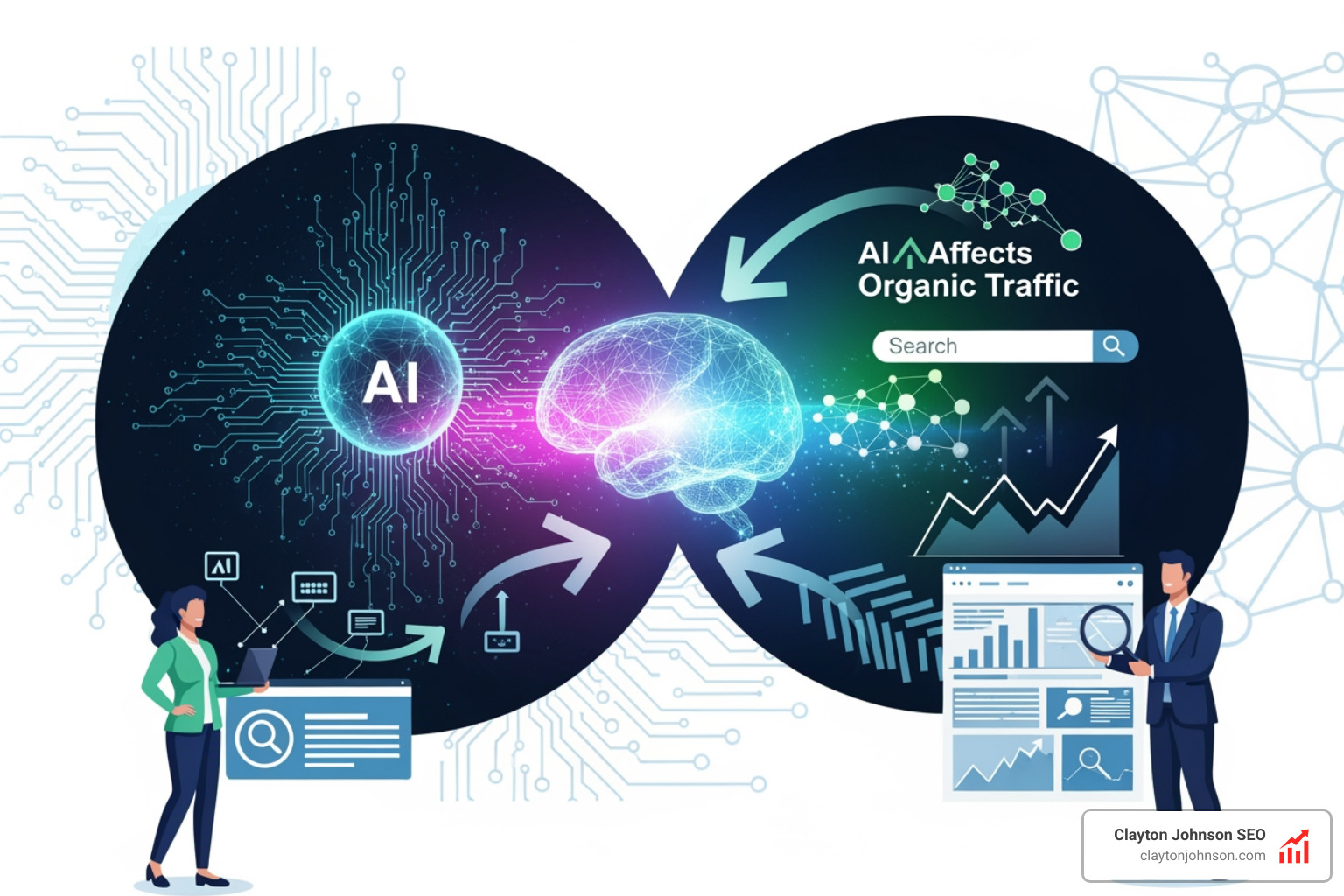
- Zero-click searches now account for 60% of all Google queries (77% on mobile)
- AI Overviews appear in 13% of searches and reduce click-through rates by 47% when present
- Traffic declines range from 10-80% for publishers, with major brands like HubSpot and Forbes reporting 50-80% drops
- Visitor value shifts: AI-referred traffic converts 4.4x better than traditional organic search visitors
- Yet impressions often increase while clicks fall—creating the “Great Decoupling” phenomenon
If you’ve noticed a dip in organic search traffic or a rise in unexplained direct visits, AI tools like ChatGPT, Gemini, and Perplexity are playing a more significant role than you think. The data shows a fundamental shift: search engines are becoming answer engines, and the traditional relationship between rankings, impressions, and clicks has broken.
This isn’t about panic—it’s about strategic adaptation. The brands that understand how AI affects organic traffic today will build the systems that compound visibility tomorrow. I’m Clayton Johnson, and I’ve spent the past two years modeling how AI affects organic traffic patterns and helping founder-operators build search infrastructure that thrives in answer-driven environments. The shift requires new frameworks, new metrics, and new execution models—but the opportunity for differentiation has never been clearer.
How ai affects organic traffic terminology:
- AI SEO performance optimizer
- AI powered keyword research
- AI driven SEO audits
How AI Affects Organic Traffic: The Great Decoupling
The most confusing thing about modern SEO is seeing your keyword rankings stay the same (or even go up) while your traffic falls off a cliff. We call this “The Great Decoupling.” Historically, if you ranked #1 for a high-volume keyword, you were guaranteed a flood of visitors. Today, that connection is severed.
This decoupling is driven primarily by zero-click searches. When a user asks a question, Google’s AI Overviews (formerly Search Generative Experience) synthesizes an answer directly at the top of the page. This snapshot often takes up an average height of 1764 pixels—essentially the entire “above the fold” area on most screens. If the user gets their answer in the summary, they have no reason to click through to your website.
According to research from AIOs expansion updates, these AI Overviews have been deployed to over 200 countries. We are witnessing search evolve from a library of links to an automated retrieval system. This means your goal is no longer just “ranking” but ensuring your brand is the primary source of information the AI uses to build its answer.
To understand the depth of this shift, we have to look at how information is retrieved. Modern algorithms use multi-vector matching to find relevance rather than just keyword density. If your content isn’t structured for this new “AI layer,” you become invisible, even if you technically have the best information. For a deeper dive into this phenomenon, check out our guide on AI Search/Zero-Click Search.
Analyzing How AI Affects Organic Traffic and User Behavior
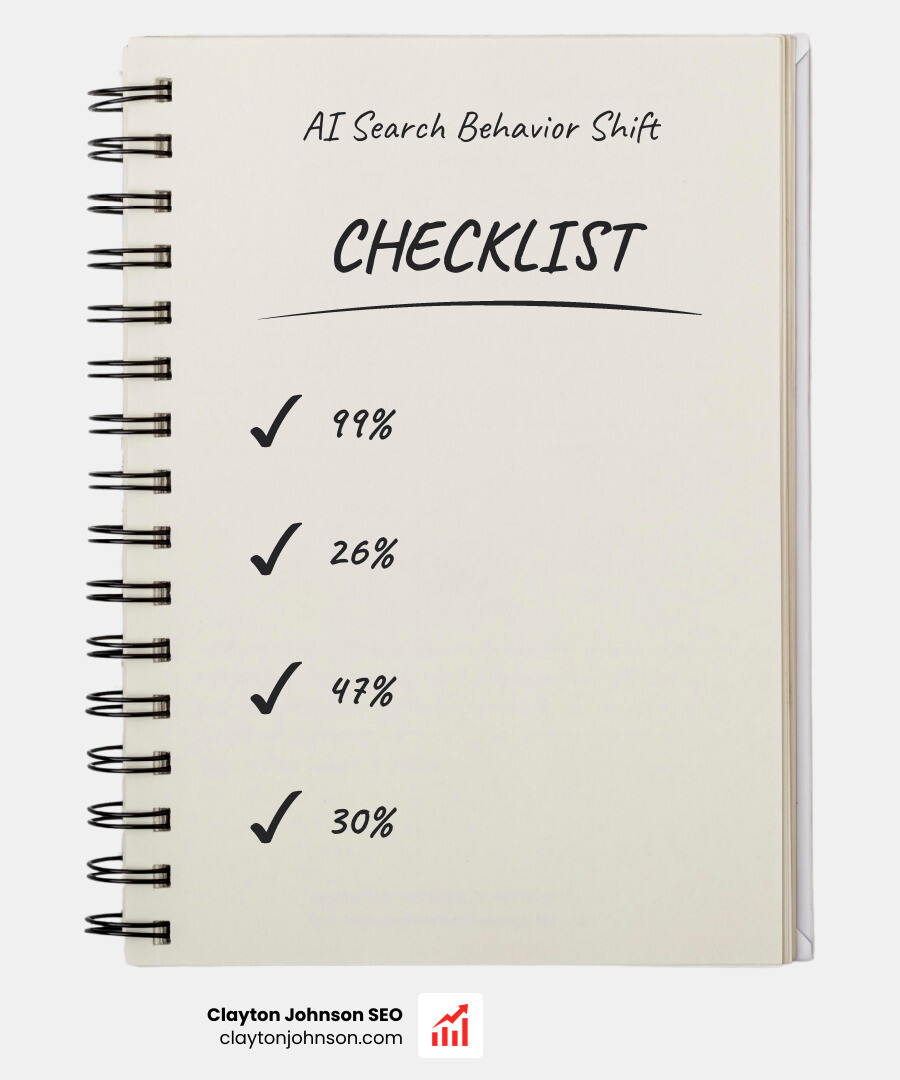
User behavior has fundamentally shifted. We’ve moved from “browsing” to “verifying.” When an AI Overview is present, click-through rates for the top organic result plummet from an average of 15% to just 8%. That is a staggering 47% reduction in potential traffic.
But it gets even more interesting—or terrifying, depending on your perspective. A Pew Research study found that 99% of users who see an AI Overview do not click any of the cited sources. Furthermore, 26% of users close their browser entirely after reading the summary. They got what they needed, and they’re done.
So, where do the remaining searchers go? They are increasingly looking for “Social Proof.” We see a massive trend of users leaving AI summaries to search on Reddit, YouTube, or niche forums. They want to verify that the AI isn’t hallucinating. They want to hear from a human in Minneapolis who has actually used the product, not just a language model that read the manual. This is why Reddit has become the second most-cited website in Google AI Overviews.
Technical Adjustments for How AI Affects Organic Traffic Attribution
One of the biggest headaches for marketing leaders right now is attribution. If a user sees your brand in a ChatGPT response, doesn’t click a link, but then types your URL directly into their browser an hour later, that looks like “Direct Traffic” in your analytics. In reality, it was an AI-driven lead.
AI tools handle referral data differently, and it’s often a mess. Here is a quick breakdown of how different tools currently pass (or don’t pass) data:
| AI Tool | Referral Behavior | Attribution in Analytics |
|---|---|---|
| ChatGPT | Referral (chatgpt.com) | Often shows as Referral or Direct |
| Gemini | Varies by device | Organic on mobile, Direct on app, Referral on desktop |
| Perplexity | Generally sends referrals | Referral |
| Claude | Generally sends referrals | Referral |
Because of this inconsistency, we recommend setting up Custom AI Channels in your analytics tool. You need to distinguish between “Real Direct” (people who know you) and “AI Direct” (people who just discovered you via LLM). Without this, you might think your SEO efforts are failing when they are actually driving high-value, pre-qualified leads.
As Kelly Cutler suggests, this search reset is merely the latest seismic shock in an always-changing ecosystem. To stay ahead, you must understand The Truth About AI SEO and how to track these “invisible” visitors.
Vulnerable vs. Resilient Content Ecosystems
Not every industry is feeling the pain equally. If your business model relies on “commodity information”—like news, weather, basic definitions, or simple listicles—you are in a high-vulnerability zone.
News Publishers & Informational Sites:
These are taking the hardest hit. When Google provides a full news summary or a recipe directly on the SERP, there is zero incentive to visit the publisher. Major news networks have seen traffic declines of 27-38%, while some business news outlets have reported a 50% drop. This is a “traffic apocalypse” for ad-supported models.
E-commerce & B2B SaaS:
These sectors are more resilient but face a different challenge. AI search visitors from these industries are often “warmer leads.” They’ve already used the AI to compare features, read reviews, and narrow down their choice. By the time they click through to your site, they are 4.4x more likely to convert.
According to a Search Engine Land study, AI Overviews impact queries in Healthcare (76%) and E-commerce (49%) most heavily. If you are in these spaces, your brand resilience depends on E-E-A-T (Experience, Expertise, Authoritativeness, and Trustworthiness). AI can summarize facts, but it cannot replicate genuine human experience.

Actionable Strategies for the AI Search Era
To survive the shift in how AI affects organic traffic, we have to move beyond traditional SEO. We are entering the era of GEO (Generative Engine Optimization).
GEO isn’t about keyword stuffing; it’s about becoming “citable.” AI models don’t just look for the best-ranked page; they look for the most authoritative and clearly structured answer. As Dixon Jones notes, new tools are emerging to help us understand how AI perceives our brands. If your content isn’t “chunkable” or machine-readable, the AI will simply skip over you.
Key Strategies for GEO:
- Clarity and Structure: Use descriptive headings, bullet points, and direct answers. AI loves “if-then” logic and clearly defined entities.
- Personalization: Lean into your unique POV. AI is great at the “what,” but humans are better at the “why.”
- Multi-modal Content: Support your text with original videos, infographics, and custom data. AI Overviews are increasingly pulling in visual elements.
- Authority Building: Focus on getting mentioned on third-party sites. Your AI visibility depends heavily on what others say about you.
For a complete framework on building these systems, refer to our Ultimate Guide to AI-Driven SEO Strategy.
Optimizing Content for AI Citations and LLM Visibility
The technical side of search is also changing. Google’s MUVERA algorithm (multi-vector retrieval) means the search engine is getting better at understanding the intent behind a query, even if the user doesn’t use the exact keywords.
To optimize for this, you need to implement comprehensive Structured Data (Schema.org). This acts as a roadmap for AI crawlers. If you’re a business in Minneapolis, your LocalBusiness schema should be flawless. If you’re selling a product, your Product and FAQ schema should provide the exact data points an LLM needs to cite you as a recommendation.
We also need to think about “Citation Triggers.” AI models are trained to prioritize accuracy. By citing proprietary research, original statistics, and expert quotes, you give the AI a reason to link back to you as the primary source. This is what we call building “Growth Architecture.”
Beyond Clicks: Redefining Success Metrics
If you are still measuring your SEO success solely by raw clicks, you are going to be very depressed by your next board meeting. We need to shift our focus to metrics that actually reflect revenue in an AI-dominated world.
New Metrics to Prioritize:
- Conversion Rate from AI Referrals: Since these visitors are 4.4x more likely to buy, 100 visitors from ChatGPT might be worth 1,000 visitors from traditional search.
- Brand Mentions in LLMs: Are you being cited in AI Overviews even if you didn’t get the click? This is the new “Top of Funnel” awareness.
- Time on Page and User Journeys: Are users who do click staying longer? High-quality, experience-based content should drive deeper engagement.
- Total Search Visibility: This includes your presence in traditional rankings, AI Overviews, featured snippets, and knowledge panels.
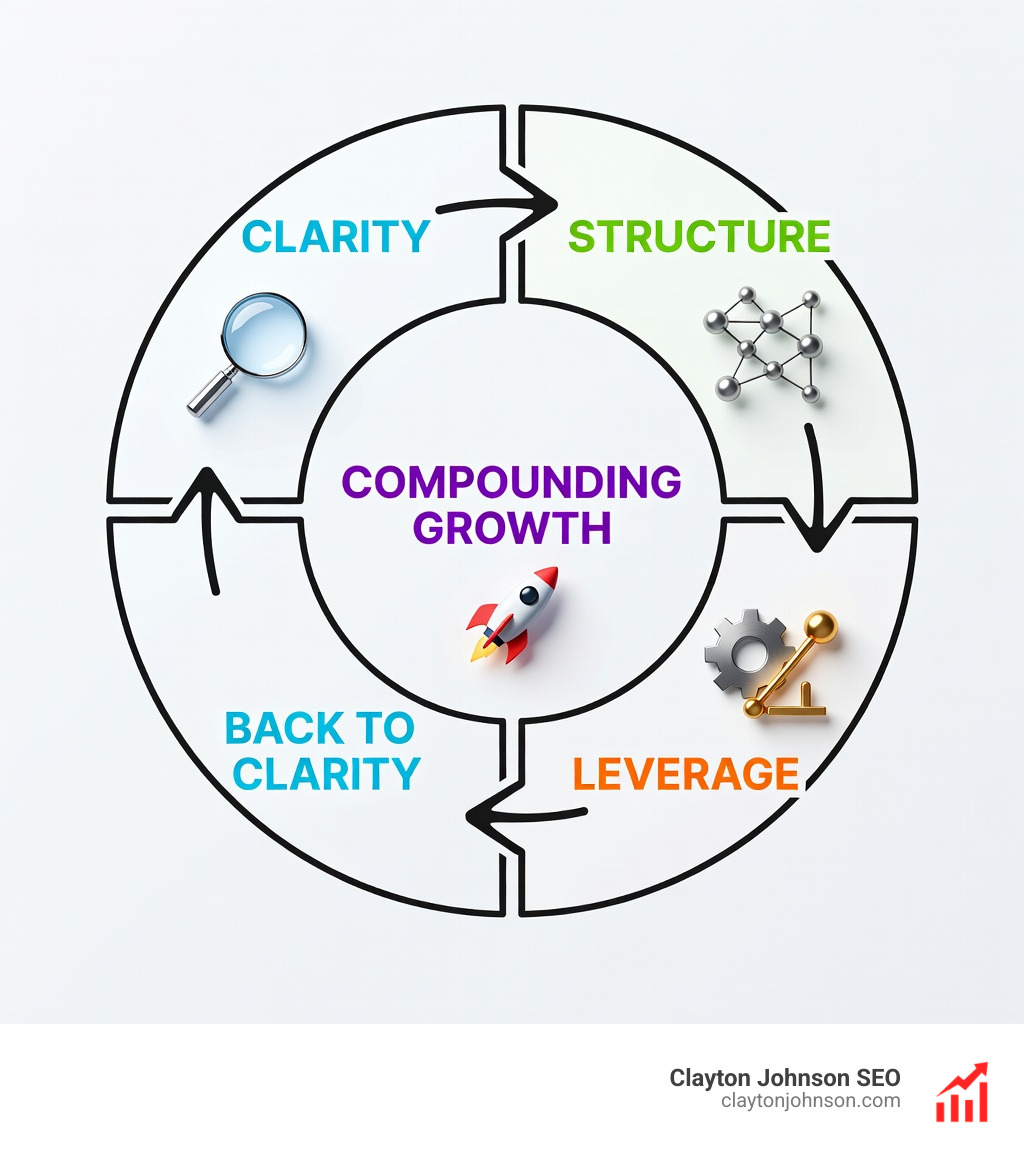
At Demandflow.ai, we believe that clarity leads to structure, which leads to leverage. By performing a Growth Audit in the Age of AI, you can identify where your traffic is actually coming from and how to attribute revenue to your brand’s presence in the AI layer.
Frequently Asked Questions about AI and Search
Is traditional SEO dead because of AI?
Absolutely not. But the old way of doing SEO—chasing high-volume, low-intent keywords—is dying. SEO is evolving into GEO. You still need to rank well because 75% of AI Overview citations come from the top 1-2 organic positions. Traditional SEO is now the “ticket to entry” for AI visibility.
How can I track traffic coming from ChatGPT?
It’s tricky. While some traffic shows up as a referral from chatgpt.com, much of it is misclassified as Direct. We recommend using UTM parameters where possible and monitoring “Branded Search” volume. If people see you in ChatGPT, they will often search for your brand name on Google later.
What is Generative Engine Optimization (GEO)?
GEO is the process of optimizing your content specifically to be retrieved and cited by Large Language Models (LLMs) and AI search features. It involves a mix of technical structure, authority building, and creating high-quality, unique perspectives that AI can’t easily replicate.
Conclusion
The evolution of search is a “toothpaste-out-of-the-tube” moment. There is no going back to the way things were. How AI affects organic traffic is a challenge for those who refuse to change, but it is a massive opportunity for those who build structured growth architecture.
At Demandflow.ai, we help founders and marketing leaders move beyond simple tactics. We build the systems—the taxonomy-driven SEO, the competitive positioning, and the AI-augmented workflows—that turn search into a compounding growth engine. Whether you are a local business in Minneapolis or a global SaaS platform, the goal is the same: clarity and leverage.
If you’re ready to stop guessing and start building a resilient search presence, explore our resources on AI Search/AI SEO and see how we can help you navigate this new era. The search landscape has fundamentally changed, and only those who change with it will succeed.